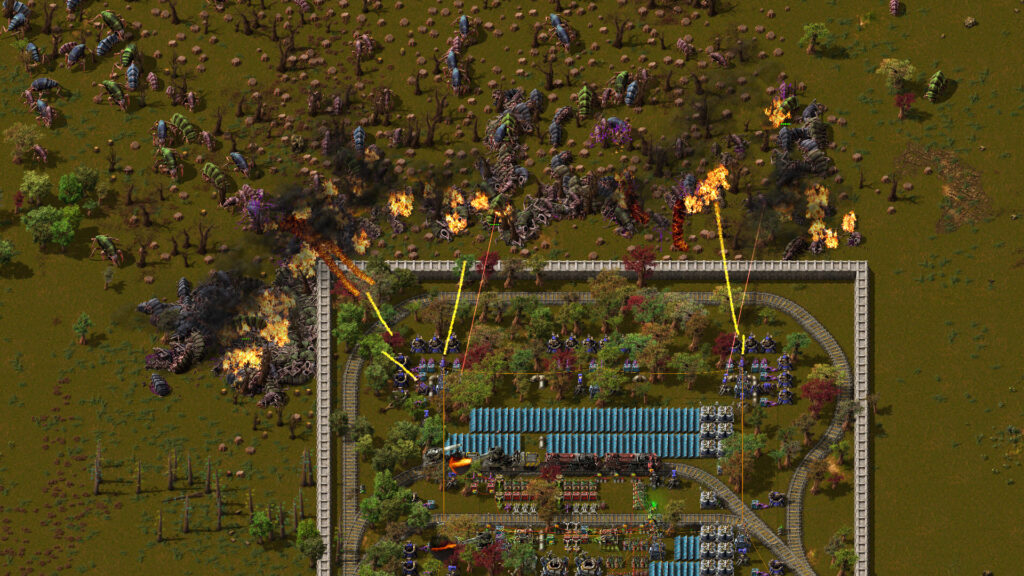
Solar generation and stored energy solve different parts of the power problem. If a factory fails at night, identify whether it lacked storage, daytime energy to fill that storage, or enough delivery at the moment of demand. This guide assumes normal-quality equipment on Nauvis unless stated otherwise.
Read one complete day rather than one bright moment
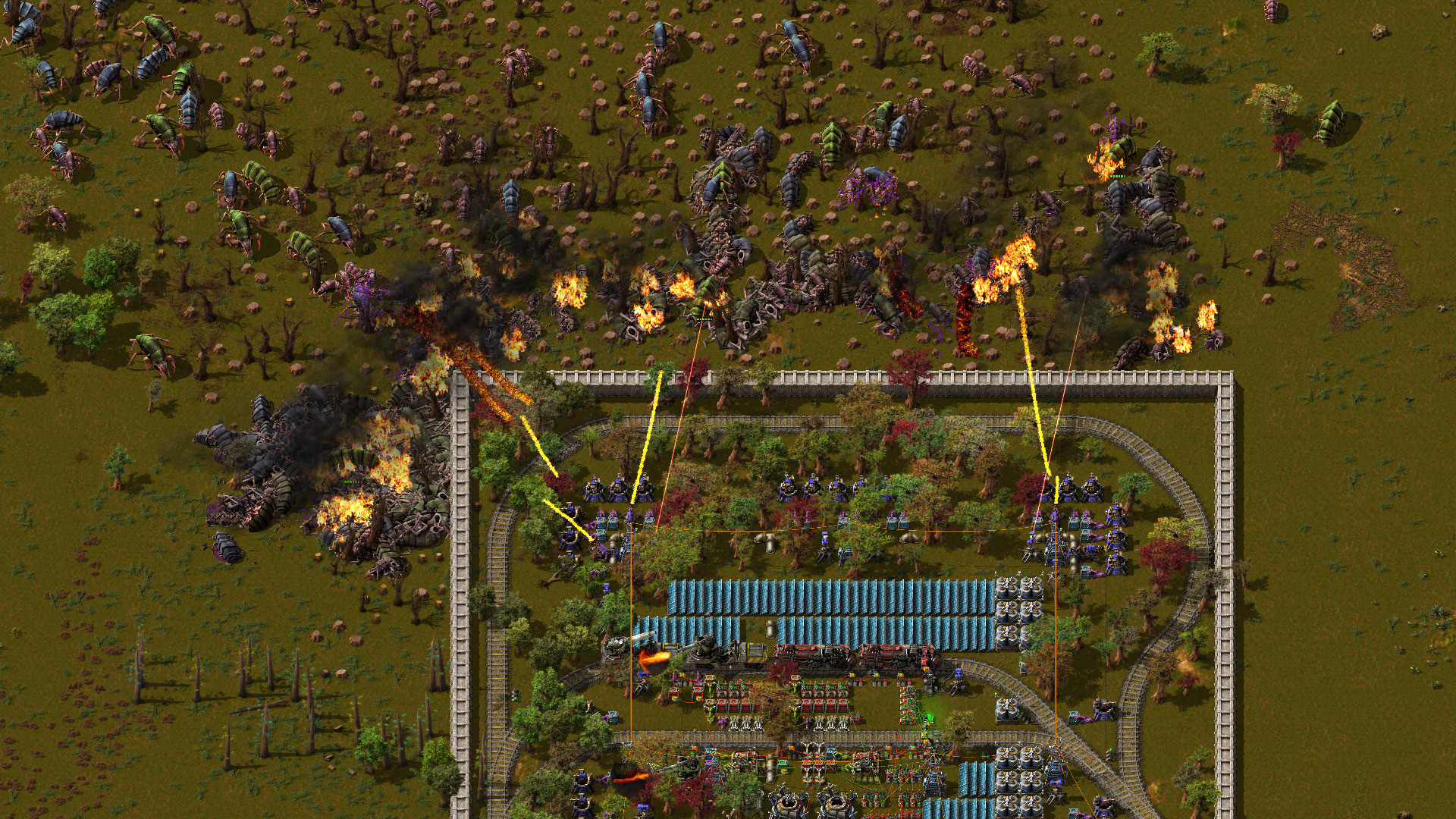
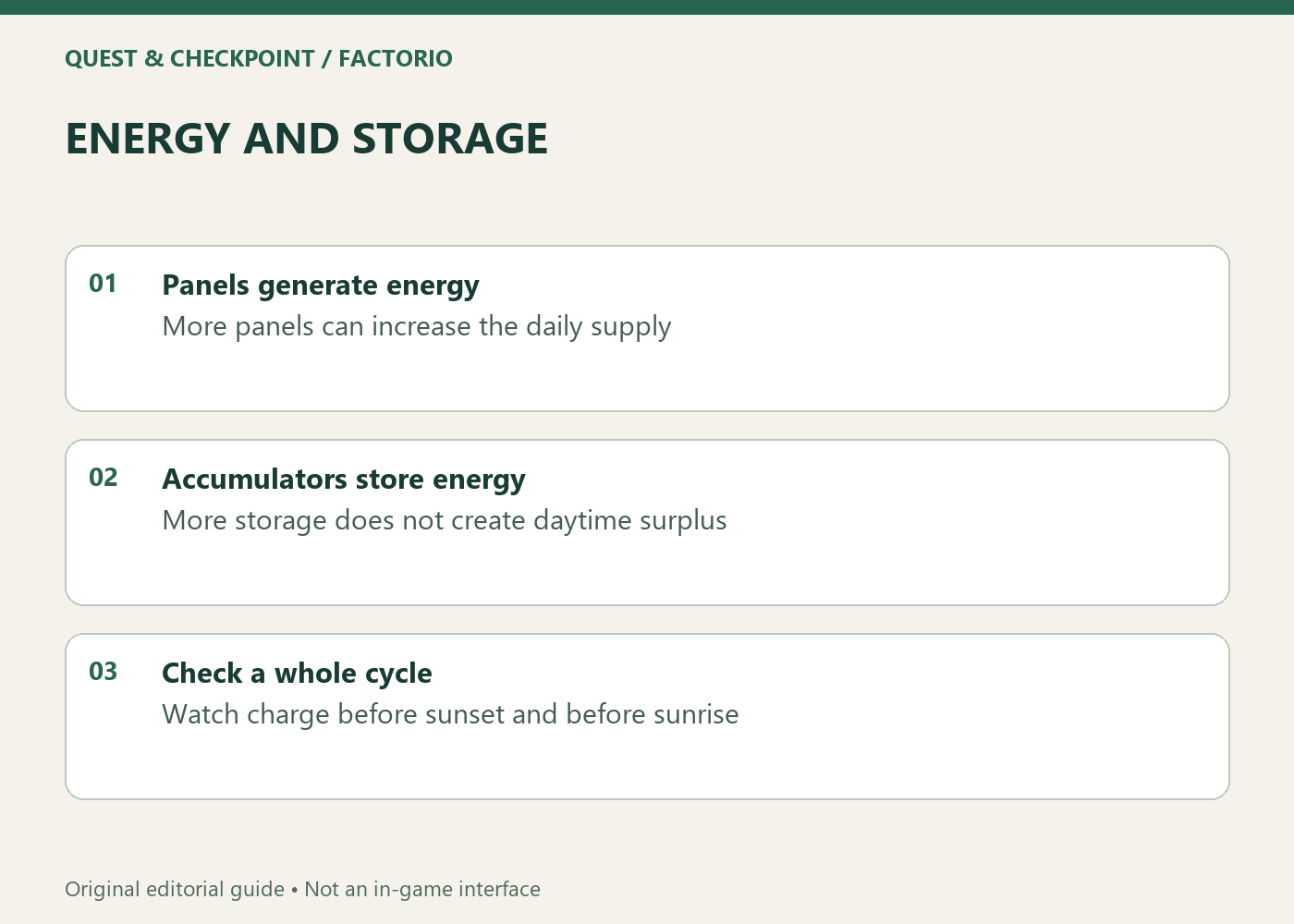
Open the electrical network information and observe production, consumption and accumulator charge through a full day and night. A healthy-looking midday value can hide a battery bank that never becomes full. Conversely, batteries may fill early and still run out before sunrise because there is not enough stored energy for the overnight load.
Record the charge near the end of daylight and near the end of night. Those two observations already separate useful cases. If charge never reaches its intended reserve, investigate generation and daytime demand. If it reaches full and then empties too early, inspect storage and the actual night load. Avoid drawing a conclusion from one instant while machines are temporarily idle.
Use average generation for a sustained load
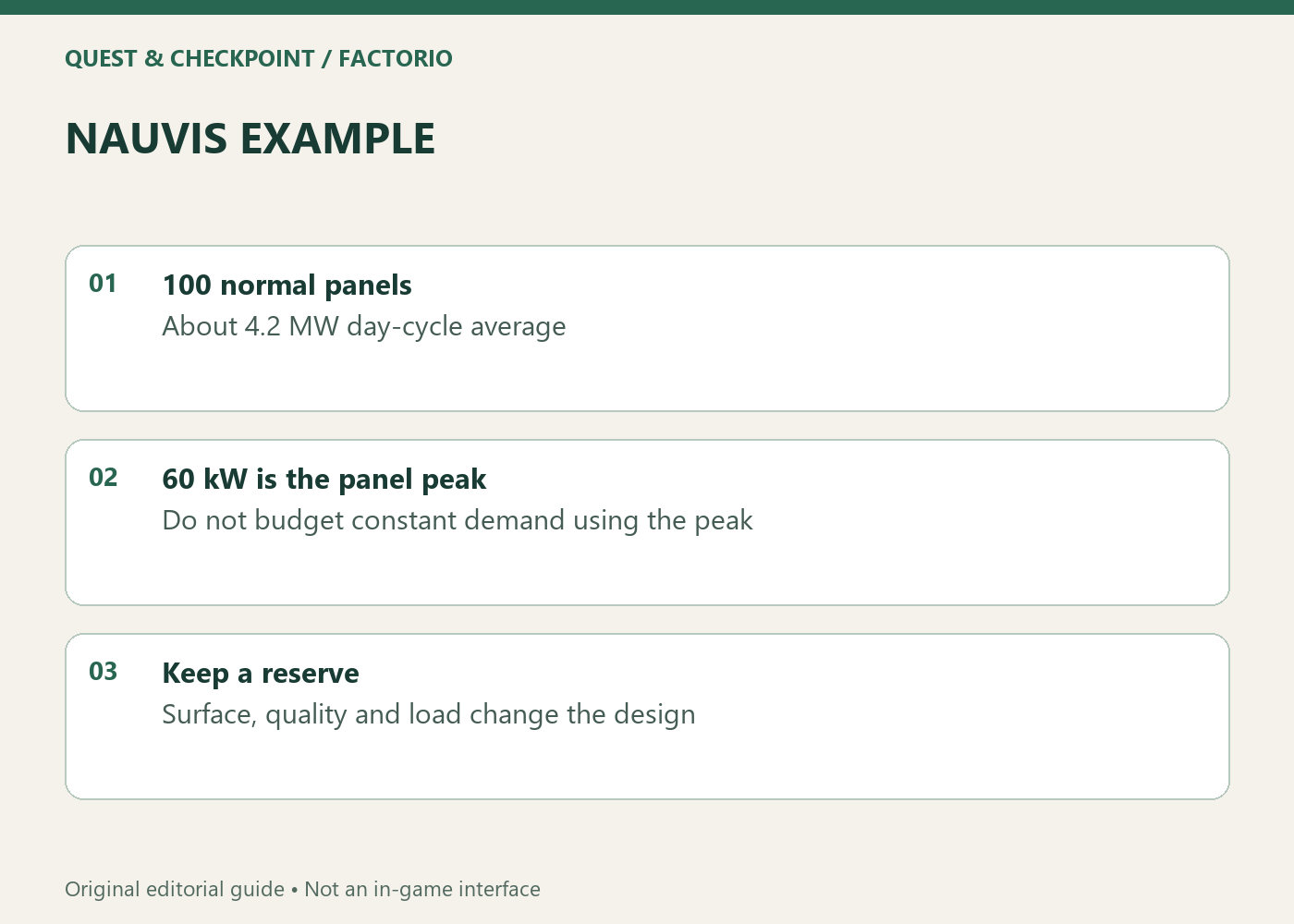
A normal solar panel on Nauvis can produce 60 kW at peak daylight, but its day-cycle average is about 42 kW. Dividing a constant factory load by the peak value therefore understates the number of panels needed for an all-day solar system. The shortfall may only become visible when the accumulators stop covering it.
As a simple energy illustration, 100 such panels average about 4.2 MW over the day cycle before you account for a practical reserve. This is not a complete blueprint or a promise that every demand spike is covered. It is a way to notice a basic mismatch: a sustained load above that average cannot be solved indefinitely by adding empty storage to the same generation source.
Treat the familiar accumulator ratio as a starting point
The commonly used planning ratio of roughly 21 accumulators for 25 normal panels refers to the standard Nauvis day cycle and matched equipment assumptions. It is not a universal rule for every surface, quality combination or modded world. Use the actual surface and equipment information rather than applying an old solar blueprint wherever the building menu allows it.
Even on Nauvis, a nominal ratio does not describe your factory's changing demand. Large charging events or other bursts can require additional headroom. Keep backup generation available while testing a new array and watch a complete cycle under representative load. A system that survives a quiet night during construction has not yet demonstrated that it will support the factory after all production restarts.
Match the next purchase to the observed failure
If storage remains low through the afternoon, first investigate generation, network connection and consumption. If it fills but is exhausted before dawn, more storage may help only if the daytime surplus can recharge it. If charge remains available while part of the factory loses power, inspect the network and instantaneous supply path instead of assuming a total energy shortage.
Make one change and repeat the same observation. The useful result is sufficient reserve at the difficult point in the cycle, with normal consumers operating, not just a bigger field of panels. Keep the assumptions beside any blueprint you save: planet, equipment quality and approximate demand. That turns the design into a tool you understand rather than a ratio you hope will fit every future factory.