When a base goes dark, adding generators immediately can hide the real problem. A device may be disconnected, generation may be insufficient, or stored energy may have run out. Follow the power path from source to consumer and change one thing at a time. This is a diagnostic method, not a tested blueprint for a particular save.
First establish whether the device is connected
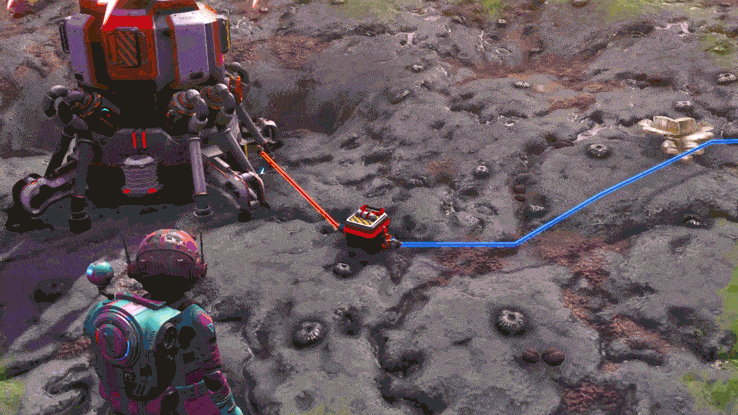
Inspect the affected structure and trace its intended connection back toward a working source. Wires and switches are part of the system, so a generator somewhere nearby is not enough evidence that the consumer is on the powered circuit. Compare the failing device with one that still works.
A useful first experiment is a small connection using components whose state you can inspect. Avoid rebuilding the entire base at once. If the minimal connection works, ask what differs in the original route: wiring, switch state, placement or connected load. Keep the experiment small enough that its result tells you something, rather than merely producing an arrangement that happens to work.
Separate generation from storage
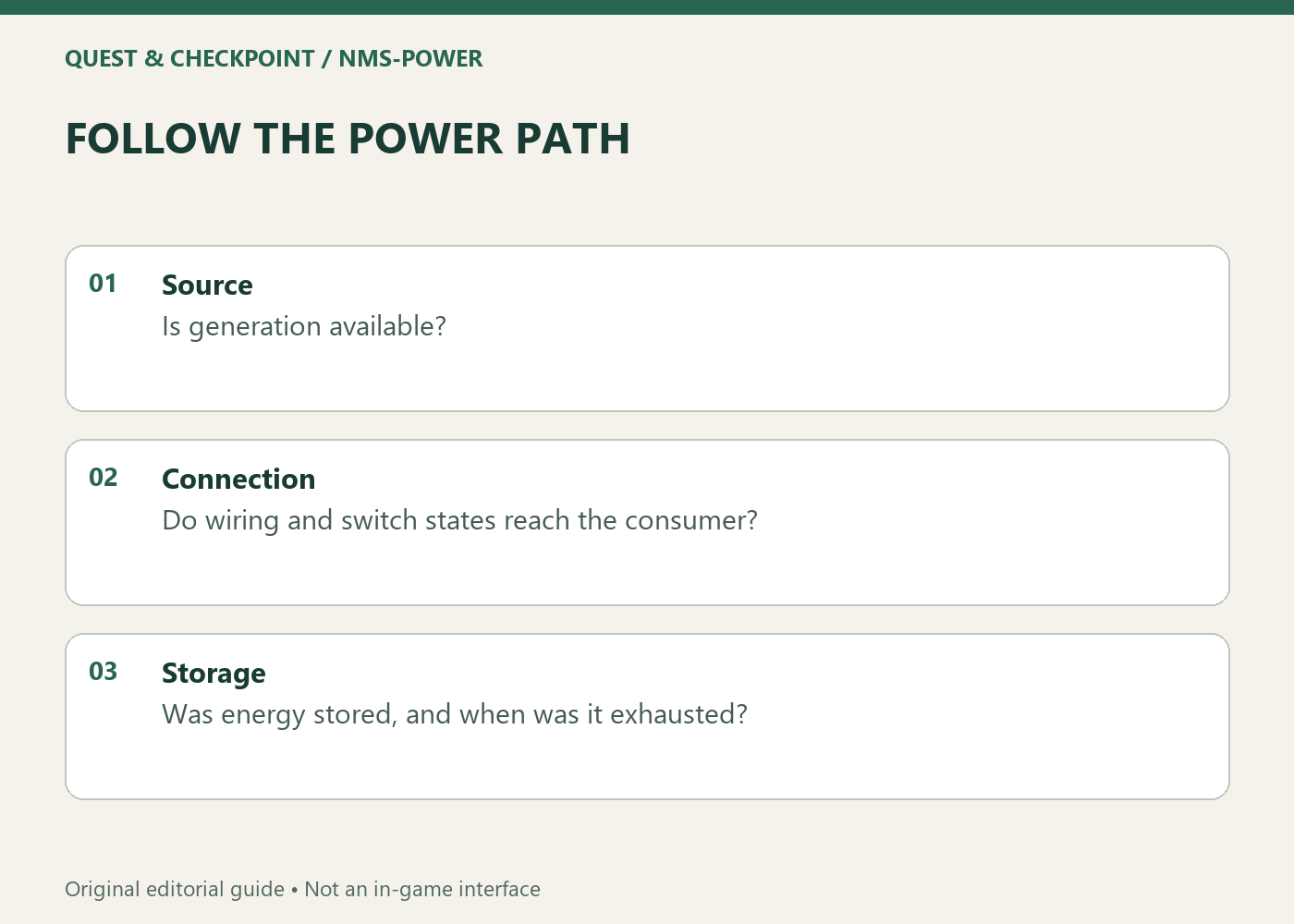
A battery stores energy; it is not a source that continuously creates it. Solar generation and stored power solve different parts of a day-and-night problem. If the base works while generation is available but fails later, inspect storage behaviour as well as the generators. Do not treat a battery's presence as proof that it was charged.
Record what the battery shows during a period with generation, then inspect it around the failure. An empty battery that never charged raises a different question from one that charged and later ran out. This observation does not prove an ideal panel-to-battery ratio. It helps you choose between examining charging surplus, overnight demand and a connection that prevents storage from participating.
Add demand in a controlled order

A base can gain consumers gradually as you expand. When a previously working system becomes unreliable, compare it with the last working arrangement. Identify recent additions before assuming an old generator is defective. Power displays and connected equipment are more informative than counting decorative structures from a screenshot.
For a diagnostic test, simplify nonessential demand where your layout permits it, then restore components in a deliberate order. Note where behaviour changes. Find a reproducible boundary instead of assuming every base has the same wiring or consumption. Record the original connections before dismantling a complicated production setup, so a failed experiment does not leave you with an unfamiliar second problem.
Test through the condition that caused the failure
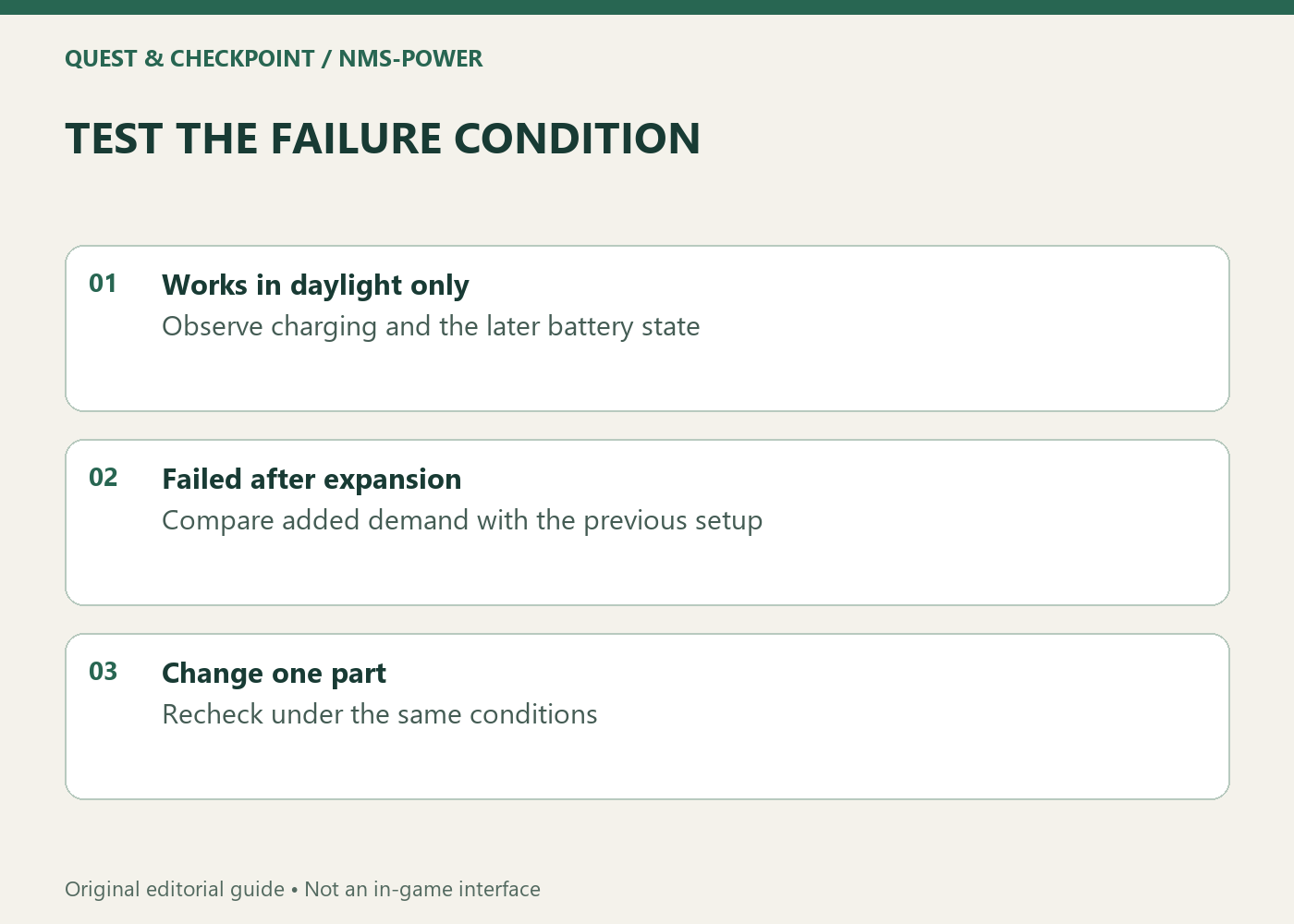
A brief daytime success does not settle a night-time problem. After changing something, observe the system under the condition that previously caused trouble. If the fault appeared after an expansion, include that demand. If it occurred after stored energy fell, inspect a comparable storage cycle. A single successful moment is only a partial result.
Keep your final note specific: a switch isolated the device, the battery was disconnected, or the system worked until charge was depleted. These are useful findings before optimization. The official images accompanying this guide are archival examples from Beyond's explanation of base power. They illustrate the system, not a promise that the current interface, your build or a particular planet will look identical.