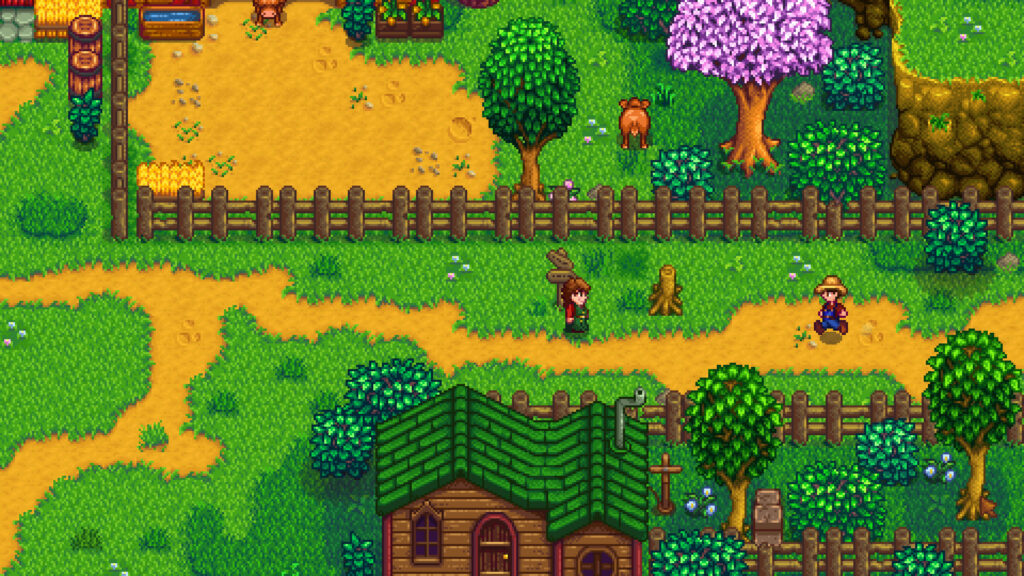
A sprinkler can water a plant you cannot reach. That is why a neat block of trellis crops can be a frustrating first planting. Before buying starters for every tile, design a harvest route. This guide concerns ordinary manual harvesting, without relying on later automation or special tools.
Treat the trellis as an obstacle
Green beans, hops and cultivated grapes grow on trellises that block walking. They are not interchangeable with a bed of walk-through crops. Their seasons and regrowth schedules also differ, so a layout decision and a planting-date decision should be checked separately against the crop you intend to grow.
Draw the occupied tiles on paper or a simple grid. Mark where your character will stand while harvesting. If a plant is surrounded by blocked tiles, do not assume you can cross the row later. A design that looks efficient from above can hide inaccessible interior plants, especially when a fence, pond or machine removes another possible approach.
Reserve lanes before adding more starters
A straightforward beginner layout is a single line of trellises beside an open walking lane. Multiple rows need accessible space between them or another arrangement whose reach you have actually checked. This sacrifices some planting area, but it makes the harvest routine understandable and repeatable.
Think about the entrance too. An open lane ending behind a chest or closed-off corner is less useful than it looks. Walk the empty route before planting and imagine stopping at each crop. If you use a controller or a different platform, try the interaction on a small test row instead of relying on a screenshot whose harvesting assumptions are unexplained.
Watering coverage does not prove access
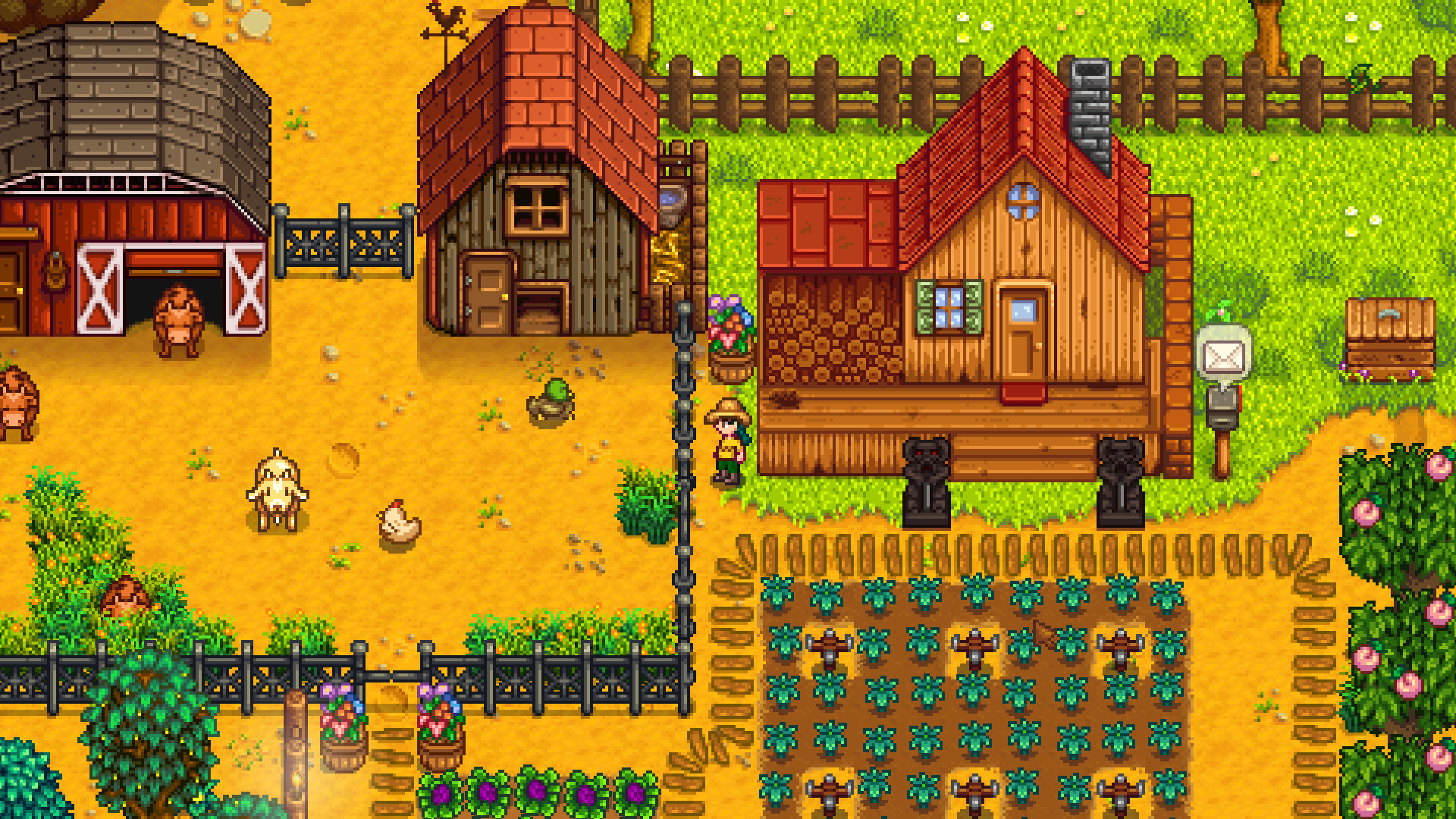
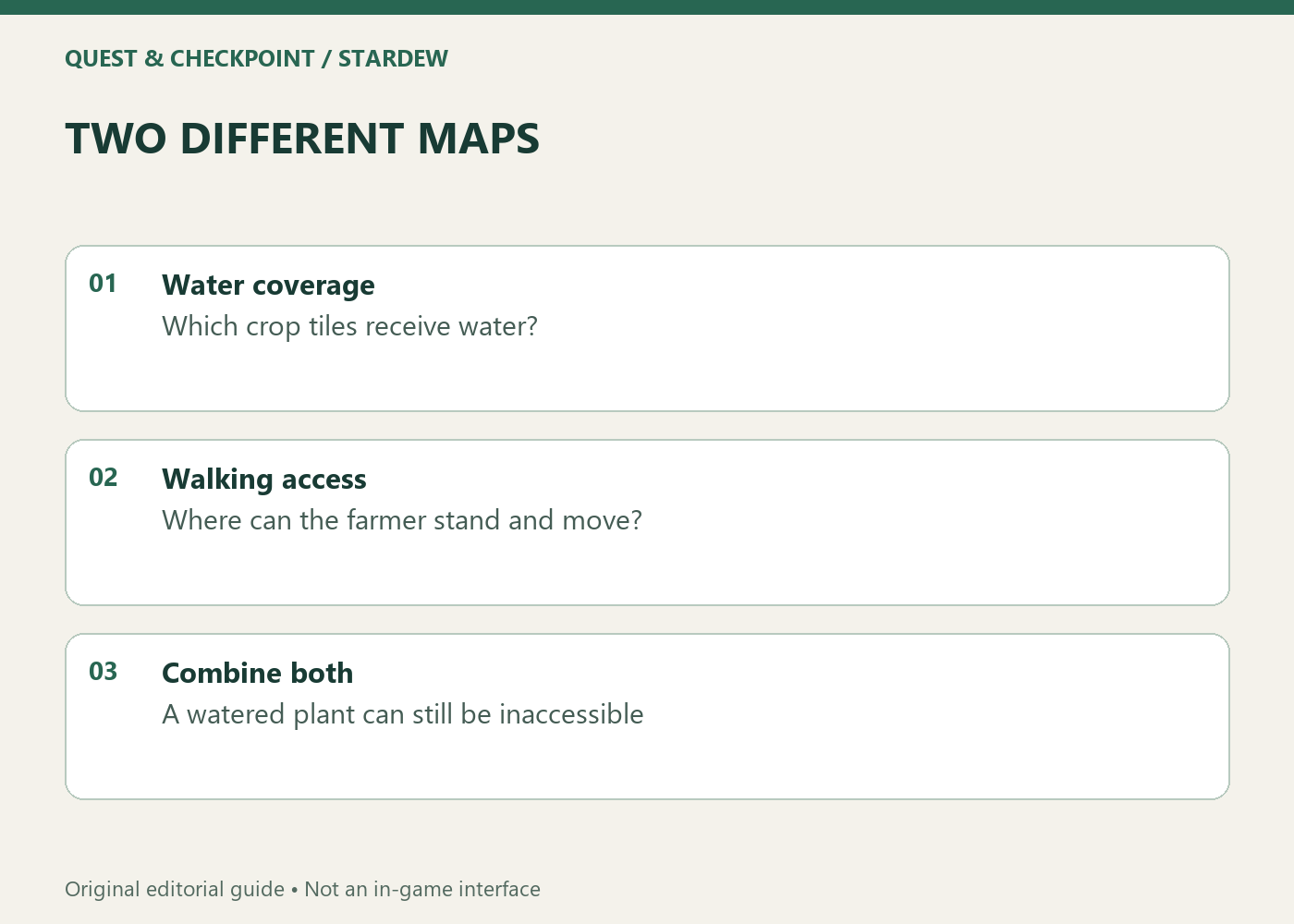
Sprinklers answer where water reaches; they do not answer where the farmer can stand. Overlay the two plans: watered tiles and reachable crop edges. When they conflict, revise the arrangement while the field is empty. Moving a proposed lane on paper is cheaper than destroying established plants after discovering the problem.
For a small field watered by hand, keep a clear return route to your water source and the rest of the farm. For a larger field, connect the path naturally to the chest or processing area you use. These are planning suggestions rather than an optimal blueprint. Terrain, available sprinklers and your daily route can justify different shapes.
Test one repeat harvest before expanding
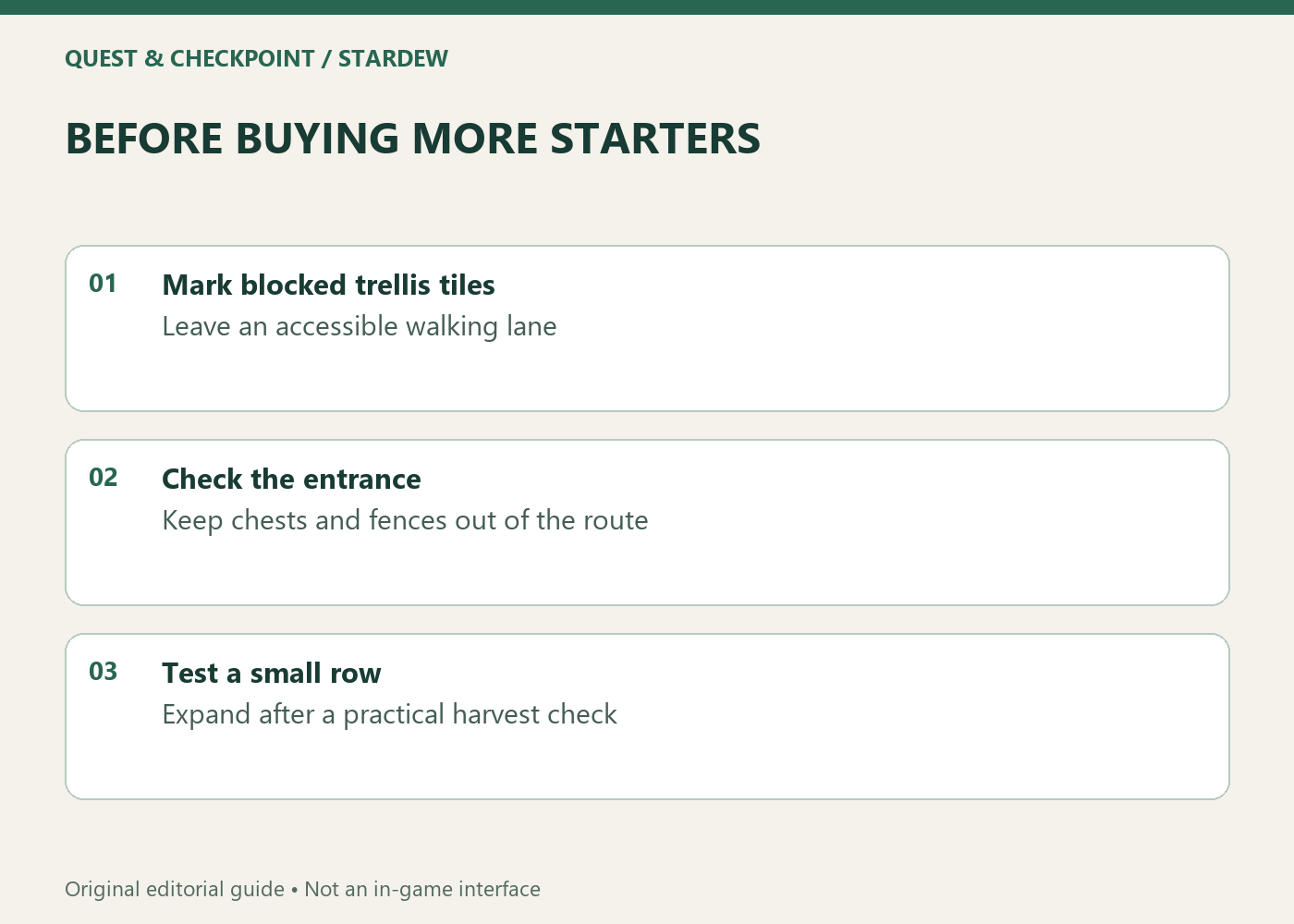
Plant a modest section first and check both the initial harvest and the routine for later harvests. Hops can create a frequent collection task once established. A layout that technically works may still become awkward when repeated across a much larger area every day. Include the walk to storage in your test instead of timing only one easy-to-reach plant.
Write down the inconvenience: one plant cannot be reached, a lane forces a long detour, or the field blocks access to another building. Solve that named problem before expanding. Do not destroy crops simply because their layout is not the densest possible. Aim for a field you can water, harvest and move around reliably, with crop growth timing checked separately before late planting.