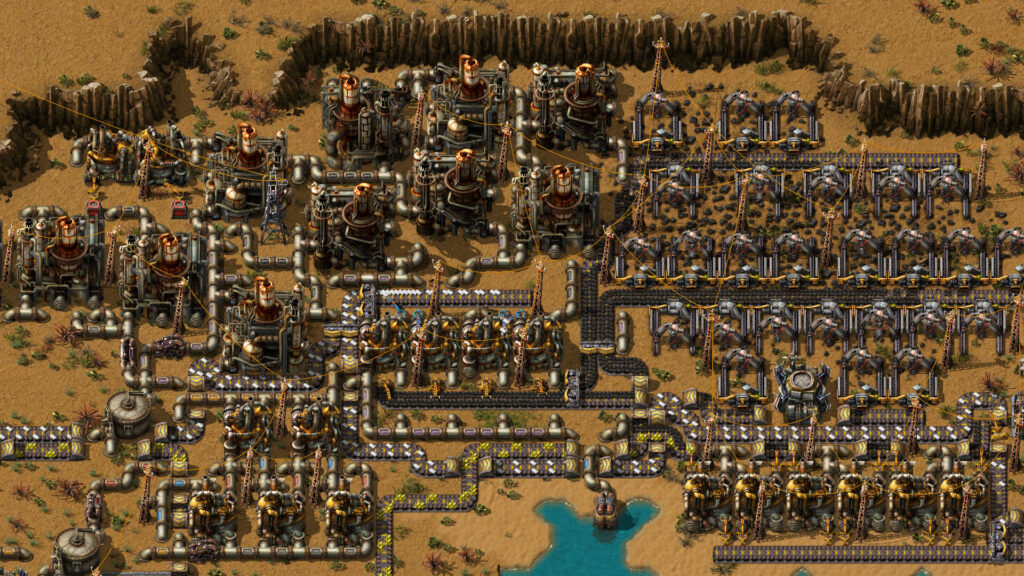
An oil refinery can stop while there is plenty of crude oil available. In advanced processing, the outputs belong to one recipe, so a backed-up product can obstruct the process you wanted for a different product. Diagnose the occupied output before expanding the plant.
Start with the refinery's actual recipe and status
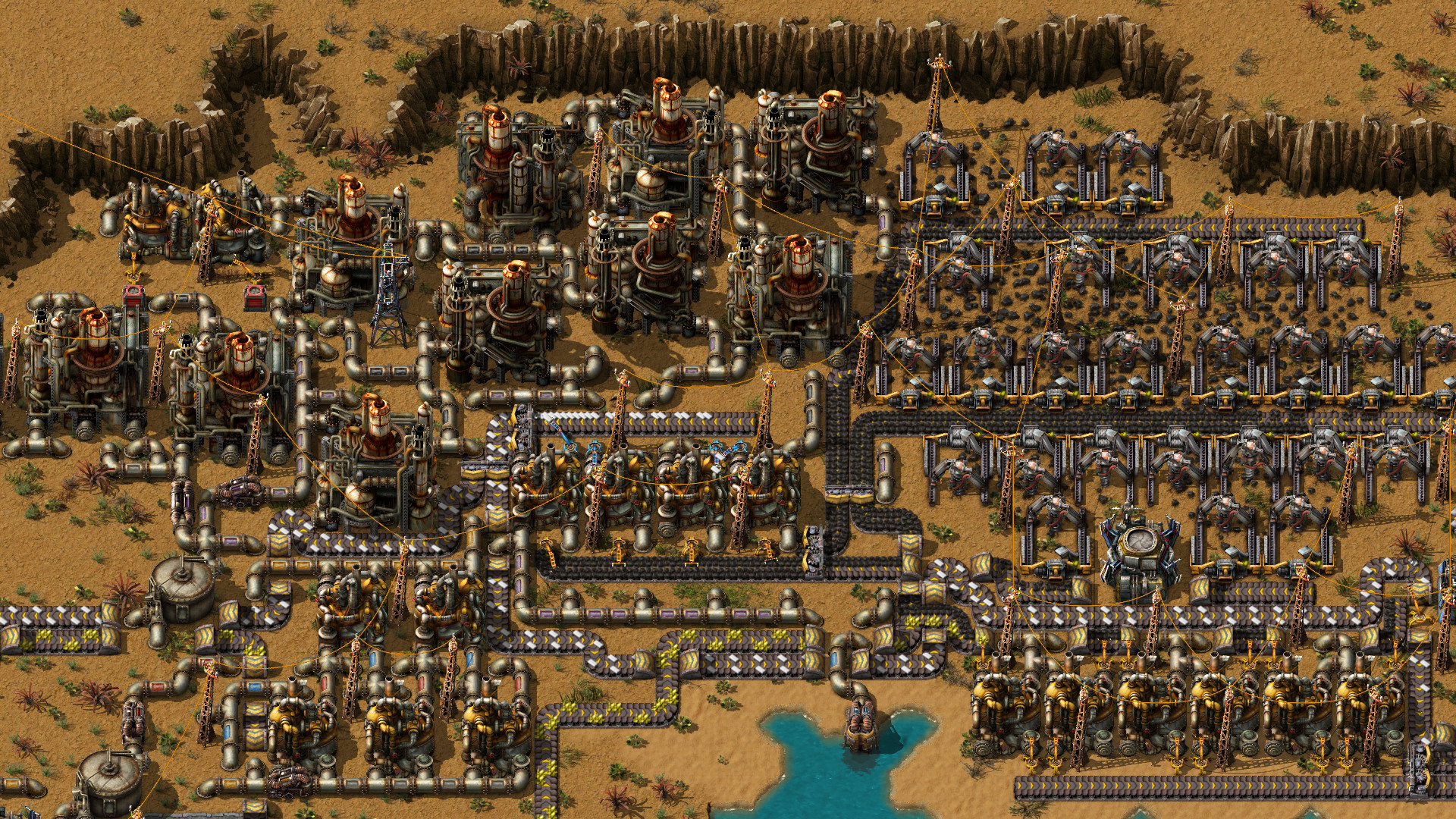
Open the stopped refinery and read its recipe and status instead of diagnosing the entire plant from an empty petroleum tank. Basic processing and advanced processing are different cases. Advanced processing produces heavy oil, light oil and petroleum gas together, while basic processing produces petroleum gas. Advice about disposing of three outputs should not be applied blindly to a basic-oil setup.
For advanced processing, inspect each output and the connected pipe path. Record which product is accumulating and which is being consumed. Adding another refinery with the same blocked output can reproduce the problem on a larger scale. First establish that the existing machine has power, the required input fluids and a usable route for every output of its selected recipe.
Use cracking to relieve the right surplus
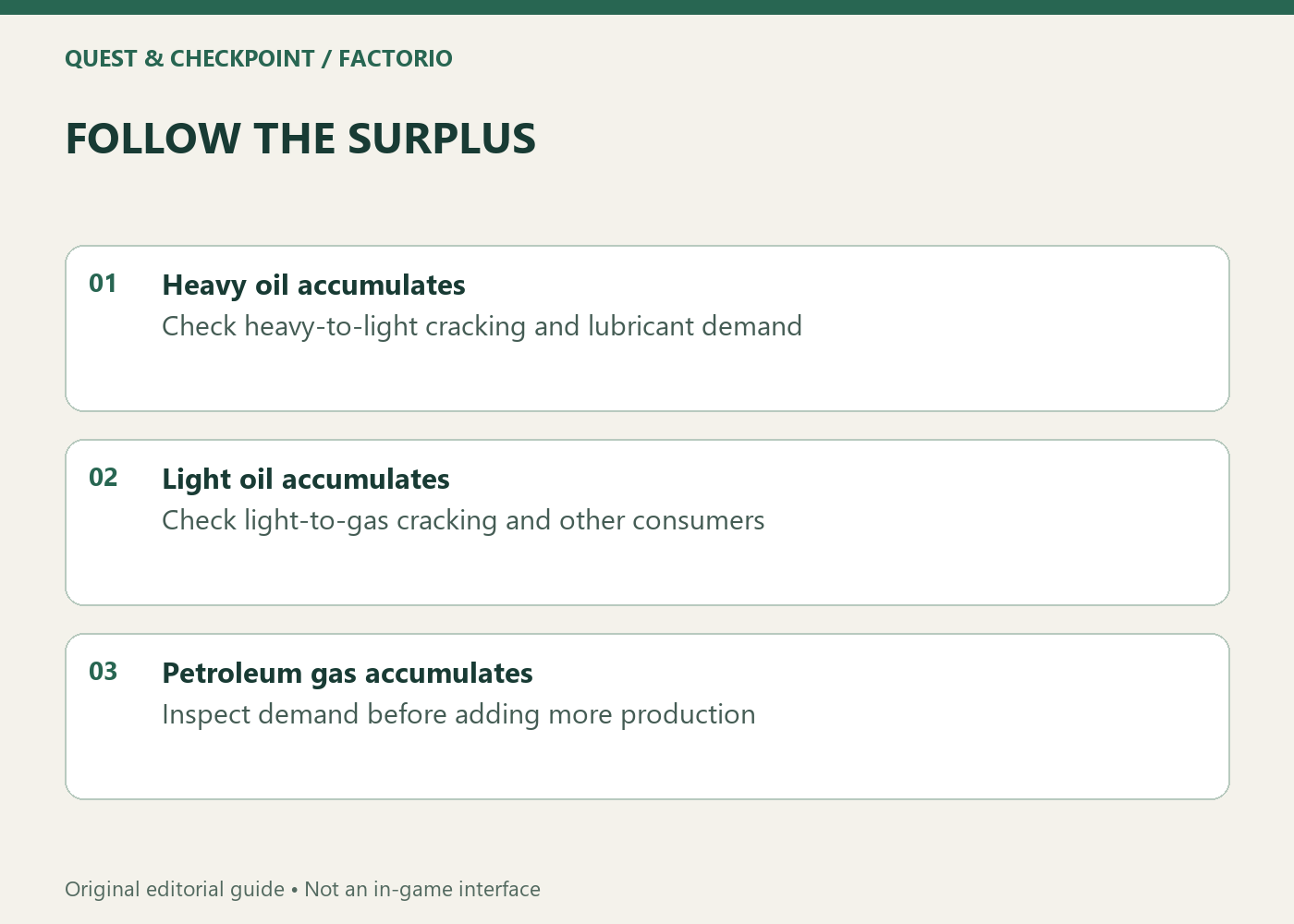
Heavy-oil cracking converts heavy oil to light oil, and light-oil cracking converts light oil to petroleum gas. That sequence explains why solving a heavy-oil backlog may simply move the blockage to light oil if the next stage cannot keep up. Follow the chain all the way to a consumer rather than stopping when one tank level begins to fall.
Inspect the chemical plant's recipe, water supply and output route as carefully as the refinery. A plant placed beside a pipe is not evidence that the correct fluid reaches the correct connection. Change one missing connection or recipe at a time, then watch whether the refinery resumes and whether the downstream tank begins accumulating a new surplus. That observation identifies the next constraint.
Keep the material you still need
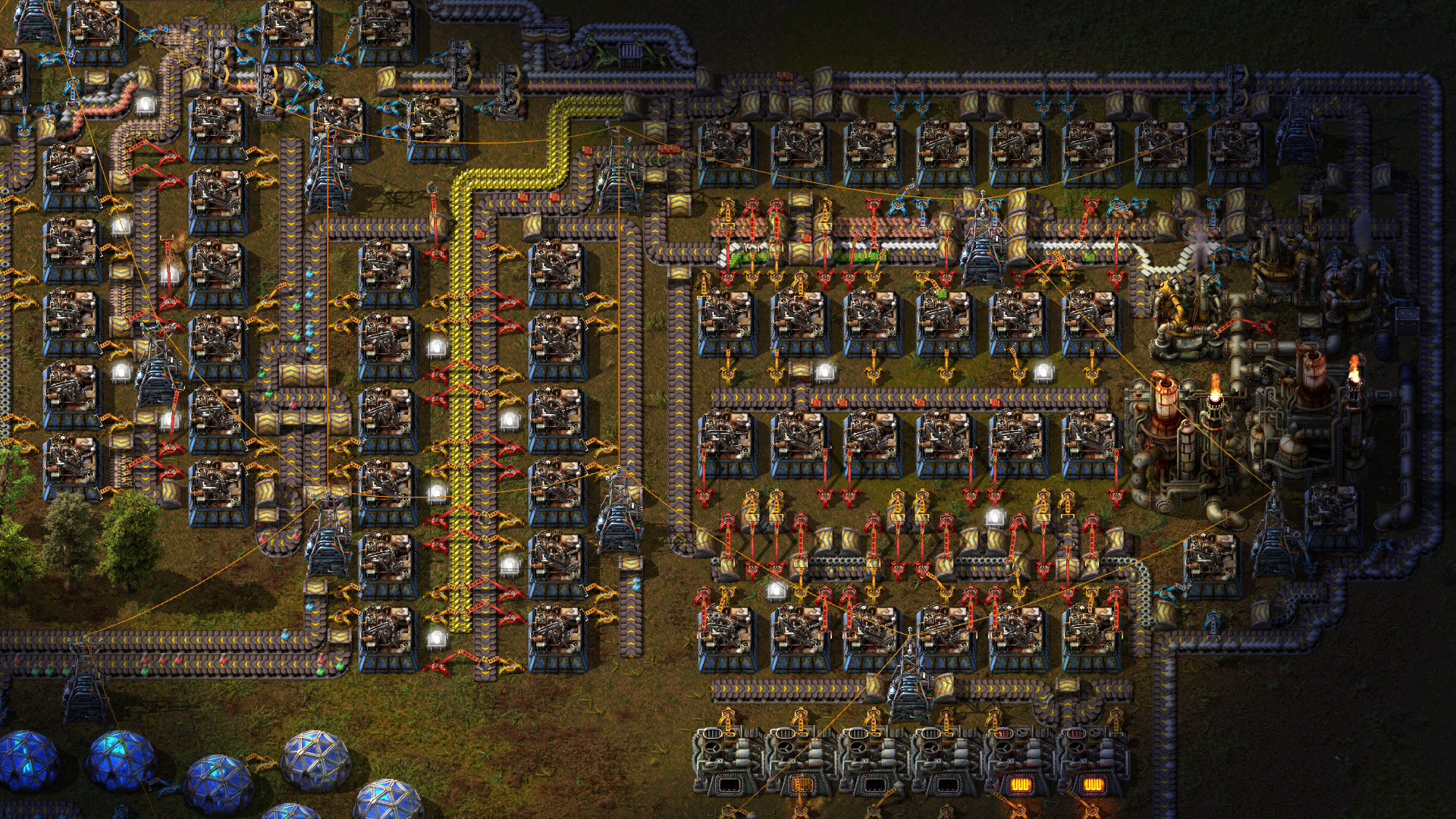
Not every unit of heavy oil should automatically become petroleum gas. Lubricant production competes for heavy oil, and light oil may have another useful destination. Decide what reserve your factory needs before using a circuit-controlled pump or enabled machine to send surplus into cracking. The threshold is a policy choice for your factory, not a universal magic number.
A useful first rule is easy to explain: preserve a reserve for the direct consumer, then crack the surplus. Test it while that consumer is actually active. A system that looks balanced when lubricant is idle may behave differently during a large build. Keep enough visibility into tank levels that you can tell whether the rule protects supply or merely hides an oversized buffer.
Use storage as a diagnostic buffer, not a permanent answer
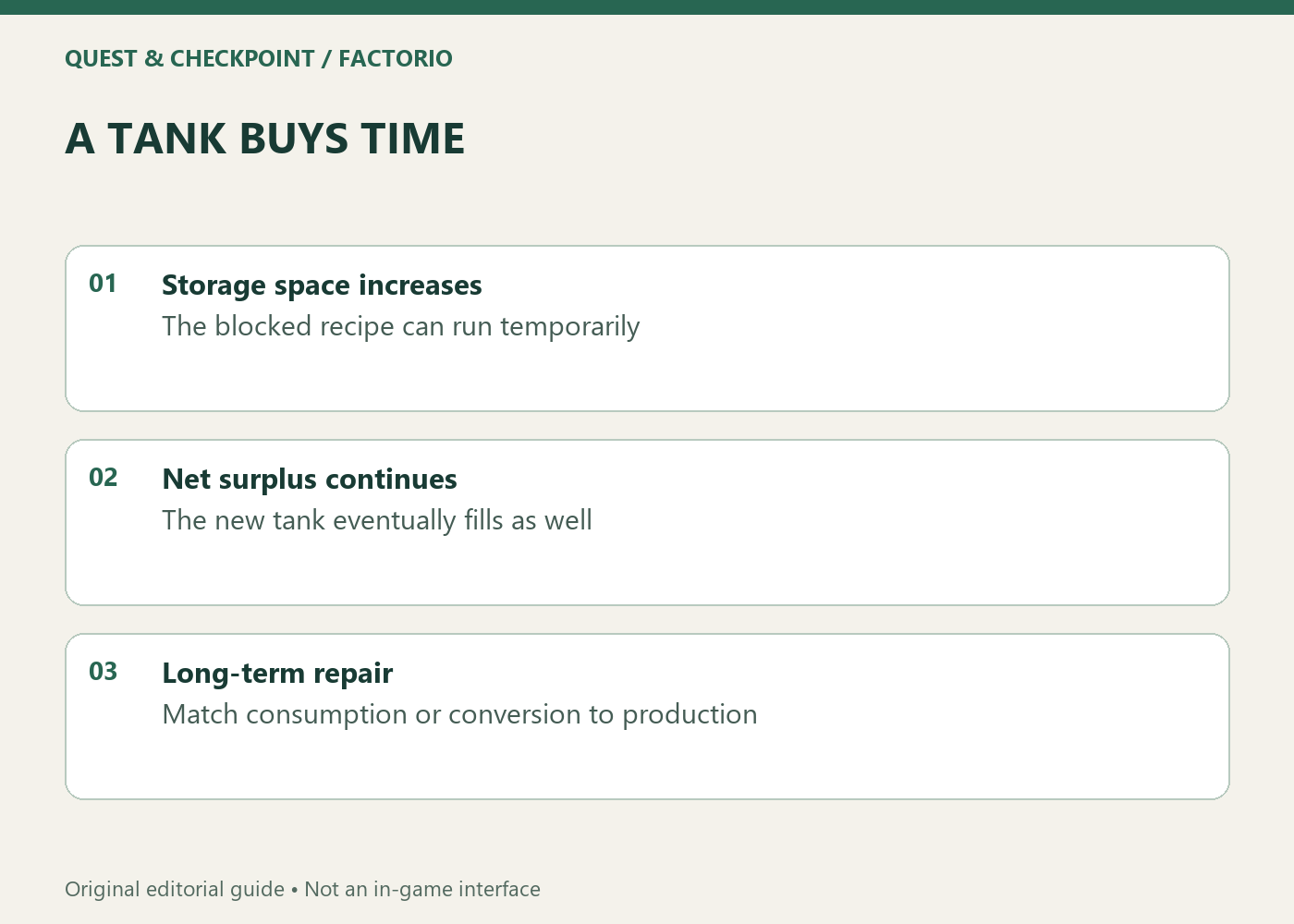
An extra tank can make production run again for a while by providing output space. That is useful evidence that the earlier blockage involved accumulated fluid. It is not proof that the production and consumption rates now match. If the same tank fills again, the underlying imbalance remains and will eventually stop the recipe in the same way.
Only after the routes and control choices work should you consider machine ratios. Published ratios have assumptions about recipes, crafting speed, productivity and which products are consumed elsewhere. A ratio copied without those assumptions can be misleading. Keep the design understandable: one known surplus, one controlled conversion and one observed destination. The goal is a stable process you can diagnose, not a large array whose temporary motion conceals the next blockage.