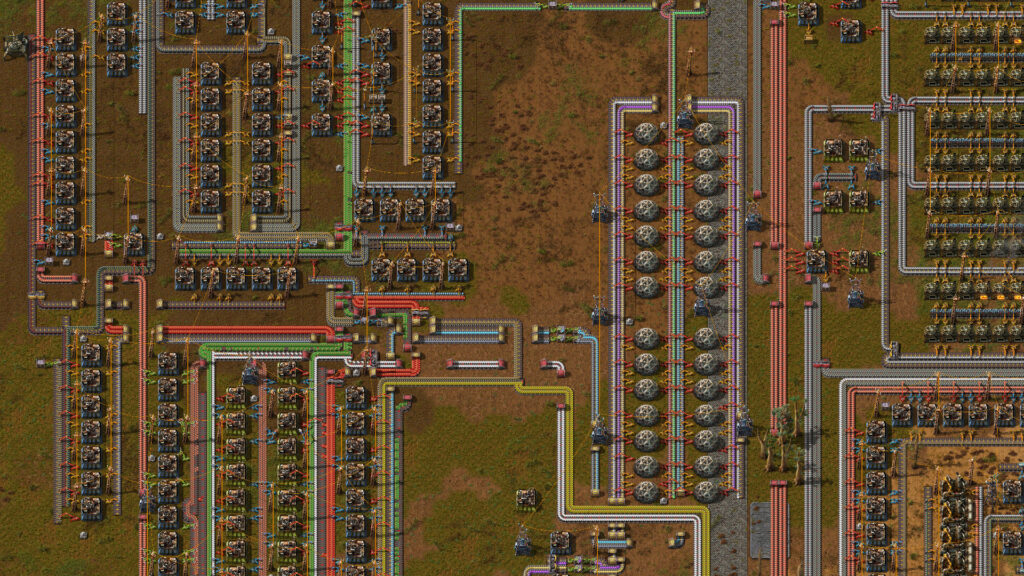
Before replacing a long run of yellow belts, inspect three places: the producer, the narrowest transport section and the consuming machines. A full belt and an empty belt describe different failures. This guide concerns unmodded belt transport; Space Age stacking requires a separate capacity calculation.
Find the boundary between a queue and a shortage
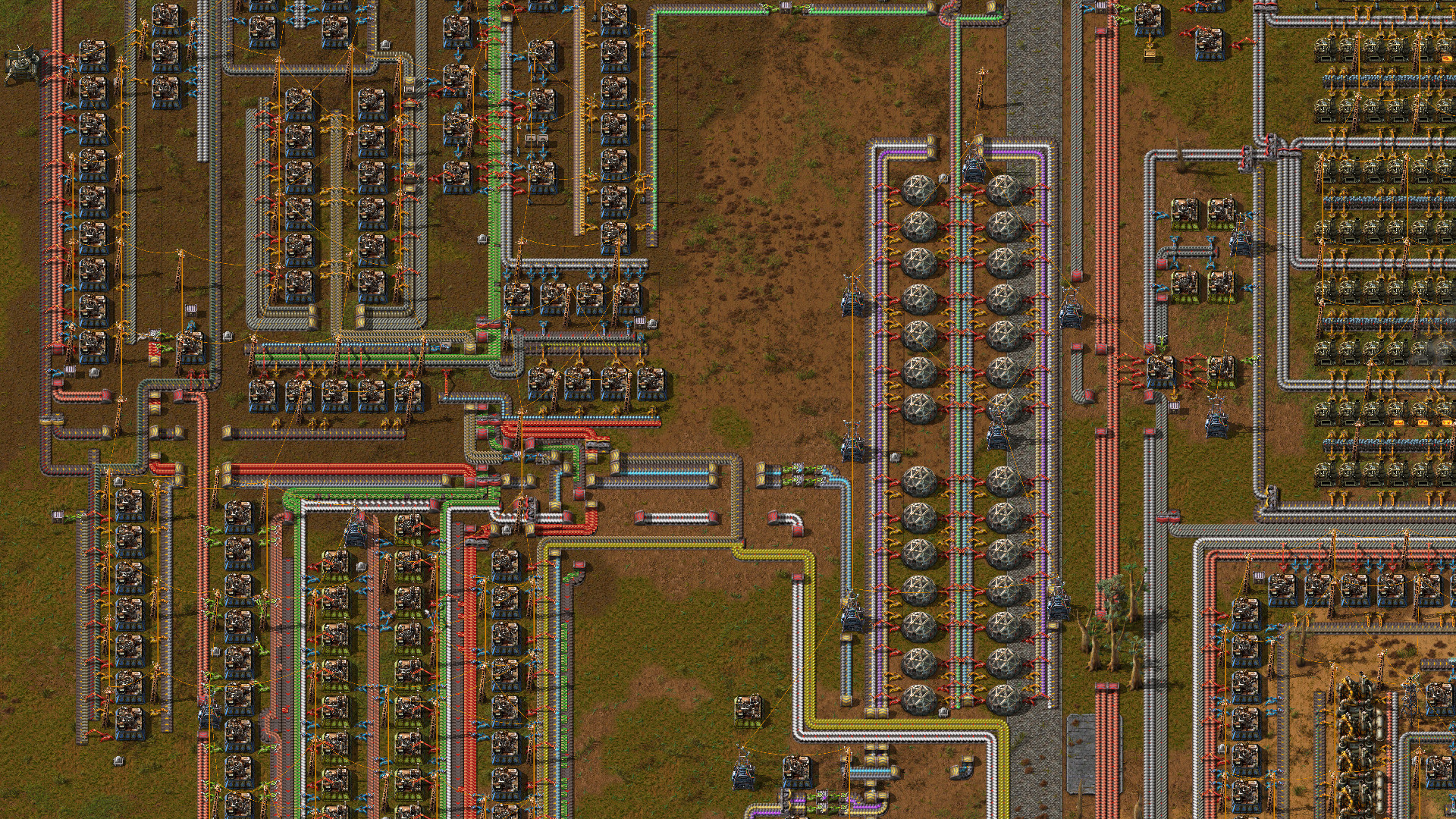
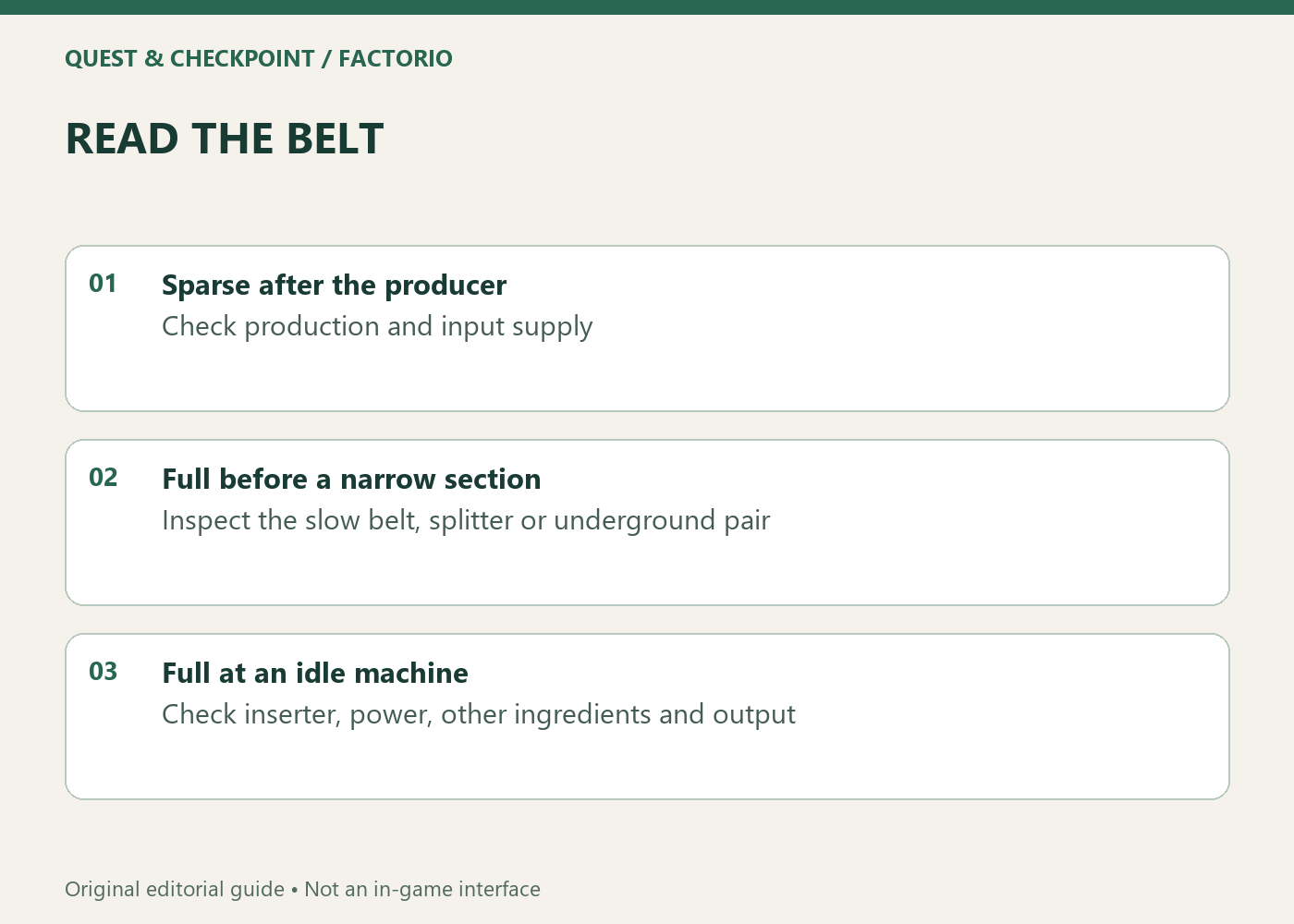
Follow the material backward from the hungry machine. If the belt is already sparse immediately after the furnaces or miners, transport speed is not the first problem to solve. Check production and its ingredients. If items queue densely before one section but become sparse after it, that section is a better candidate for a throughput bottleneck. A slow underground pair or splitter can remain after most visible belts have been upgraded.
Write down what you observe before changing anything: upstream full, downstream sparse, machine waiting for plates. Then change the suspected restriction and inspect the same three points again. This makes the result interpretable. Rebuilding the belt, adding furnaces and changing recipes at once may improve production, but it will not tell you which change was necessary.
Count both lanes without assuming both are used
With unstacked items, the standard yellow, red and blue belts carry up to 15, 30 and 45 items per second across both lanes. A single occupied lane is not the same as a fully used belt. For example, a yellow belt carrying plates only on one lane does not provide the full 15-item rate just because every visible position on that lane is filled.
Look at how inserters and side-loading put material onto the belt. If the consumer requires more than the used lane can carry, investigate lane use before buying a long upgrade. Conversely, do not balance lanes as a ritual when both are already supplying enough. The observation that matters is whether the delivery rate meets demand at the machines, not whether the belt appears perfectly symmetrical.
Treat splitter priority as allocation, not production
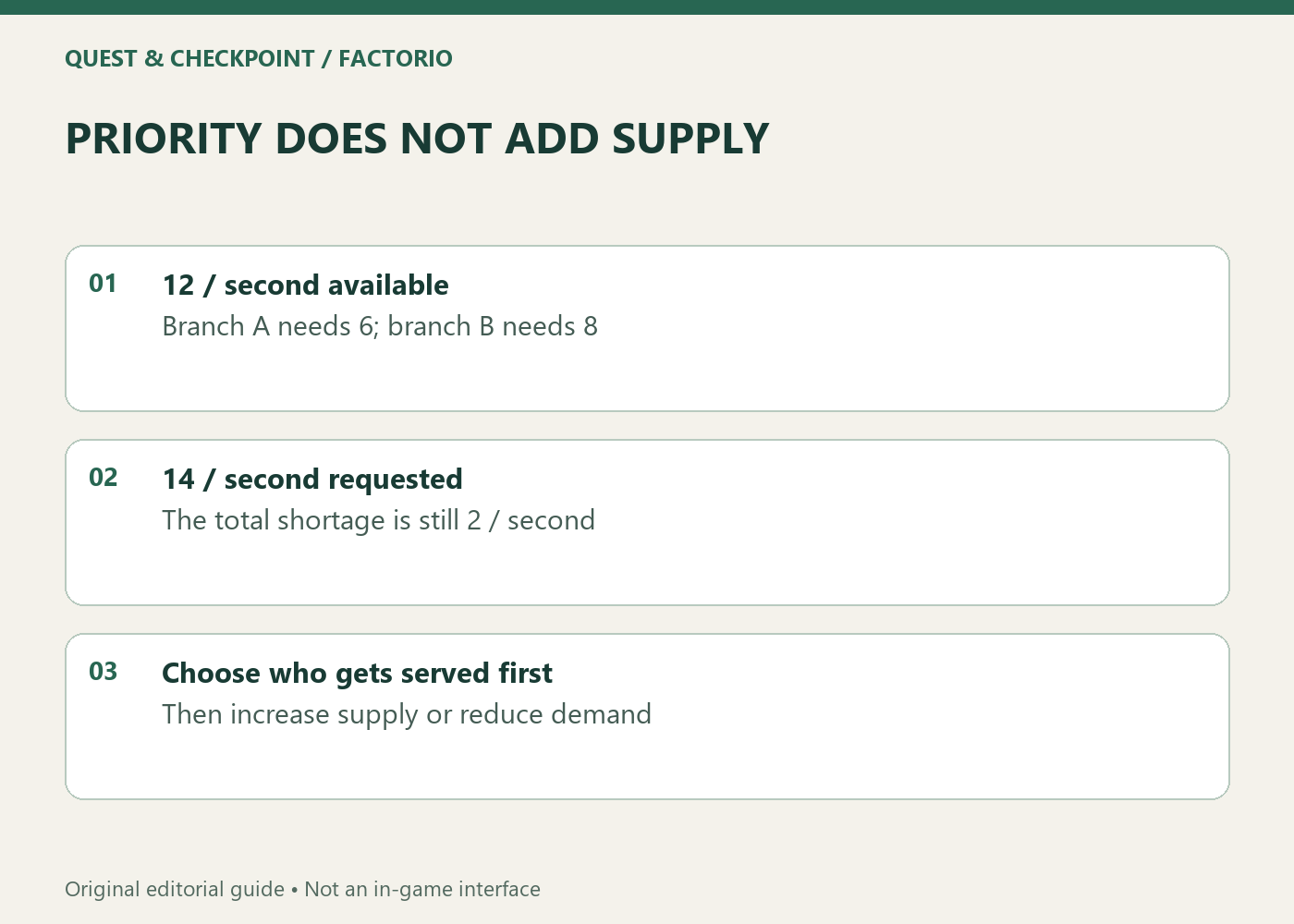
Input priority chooses which incoming side is consumed first; output priority favors a destination when it can accept material. Neither creates additional plates. If a supply produces 12 plates per second and two branches together need 14, prioritizing one branch can protect that branch while leaving the other short. It does not remove the two-plate deficit.
Use this deliberately when a critical process deserves supply first, and record which process you are allowing to wait. Also check filters: routing a particular item to one side is a different intention from merely preferring that output. A priority setting that seemed helpful during a temporary shortage can become a hidden reason another production line repeatedly starves.
Measure a useful result before extending the fix
Choose a short observation period with stable demand. The practical result is fewer idle consumers without an ever-growing upstream queue. If the belt remains full right up to a machine while that machine waits, inspect its inserter, power, recipe and other inputs. More belt capacity cannot solve a missing second ingredient or an output inventory that has nowhere to empty.
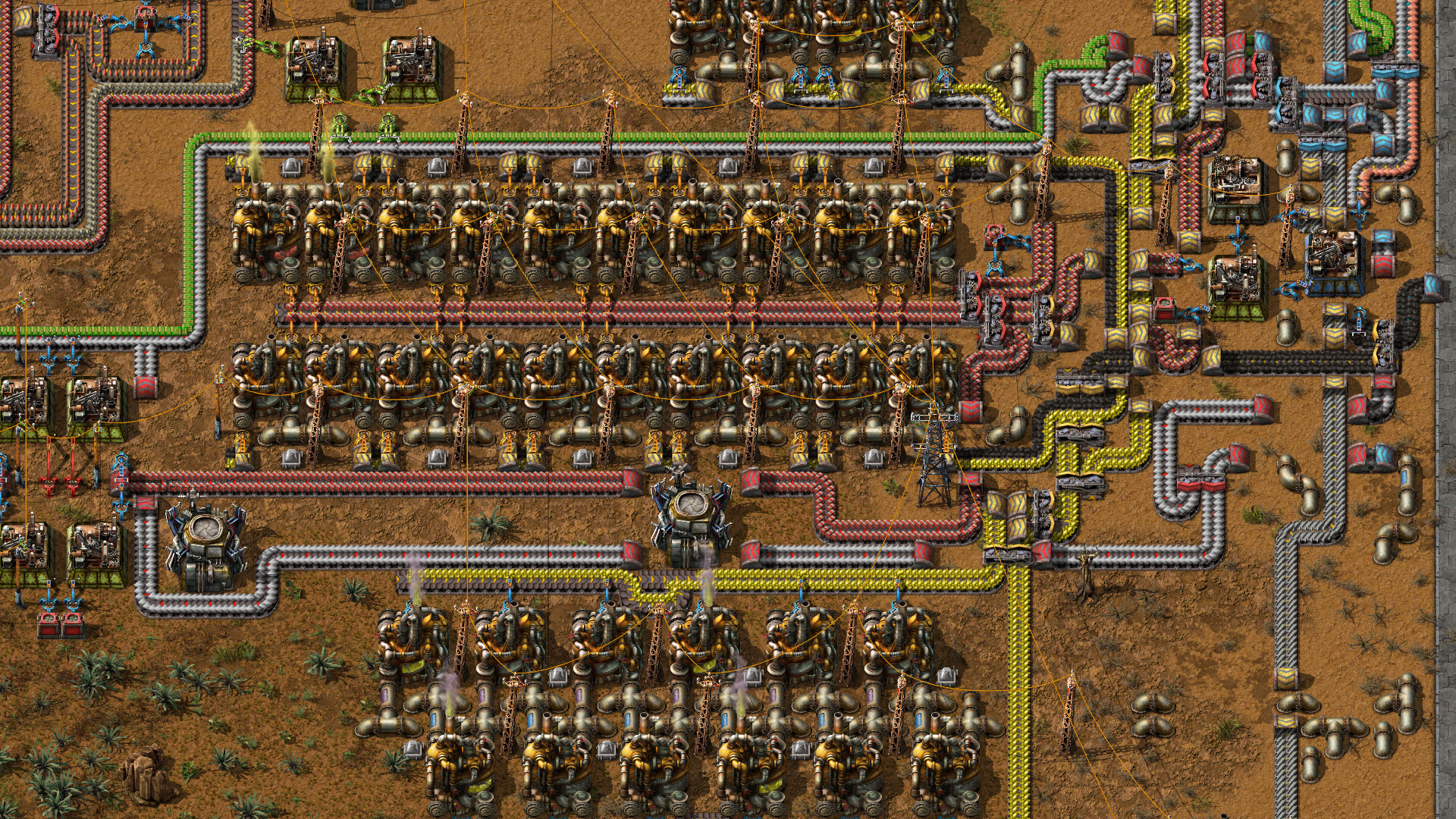
Once the cause is clear, apply the same fix only to equivalent sections. Keep a small record such as 'yellow underground segment limited this red line' or 'one lane was unused.' That explanation is reusable; a rule saying 'always upgrade belts' is not. The accompanying diagrams are editorial explanations, while the publisher screenshots provide actual Factorio context rather than a tested blueprint for your factory.