
The silo looks full, so winter should be covered. That conclusion is only safe after you count the animals eating from it. A simple animal-day budget is more useful than the word “full,” and it also reveals a second problem: having enough hay in storage is different from putting it where animals can eat.
Count the mouths that need hay

For ordinary coop and barn animals relying on hay throughout a 28-day winter, begin with one hay per animal per day. Count the animals across all relevant buildings, not just the first barn you open. This budget assumes no substitute feeding arrangement and no new animals added during the season.
Twelve animals require 12 × 28 = 336 hay. Eight require 224. If the population changes halfway through winter, split the calculation: use the old count for the first interval and the new count for the second. Keeping the intervals visible makes it easier to spot a missing group than using a rough estimate such as “about one stack.”
Compare that requirement with stored quantity, not capacity
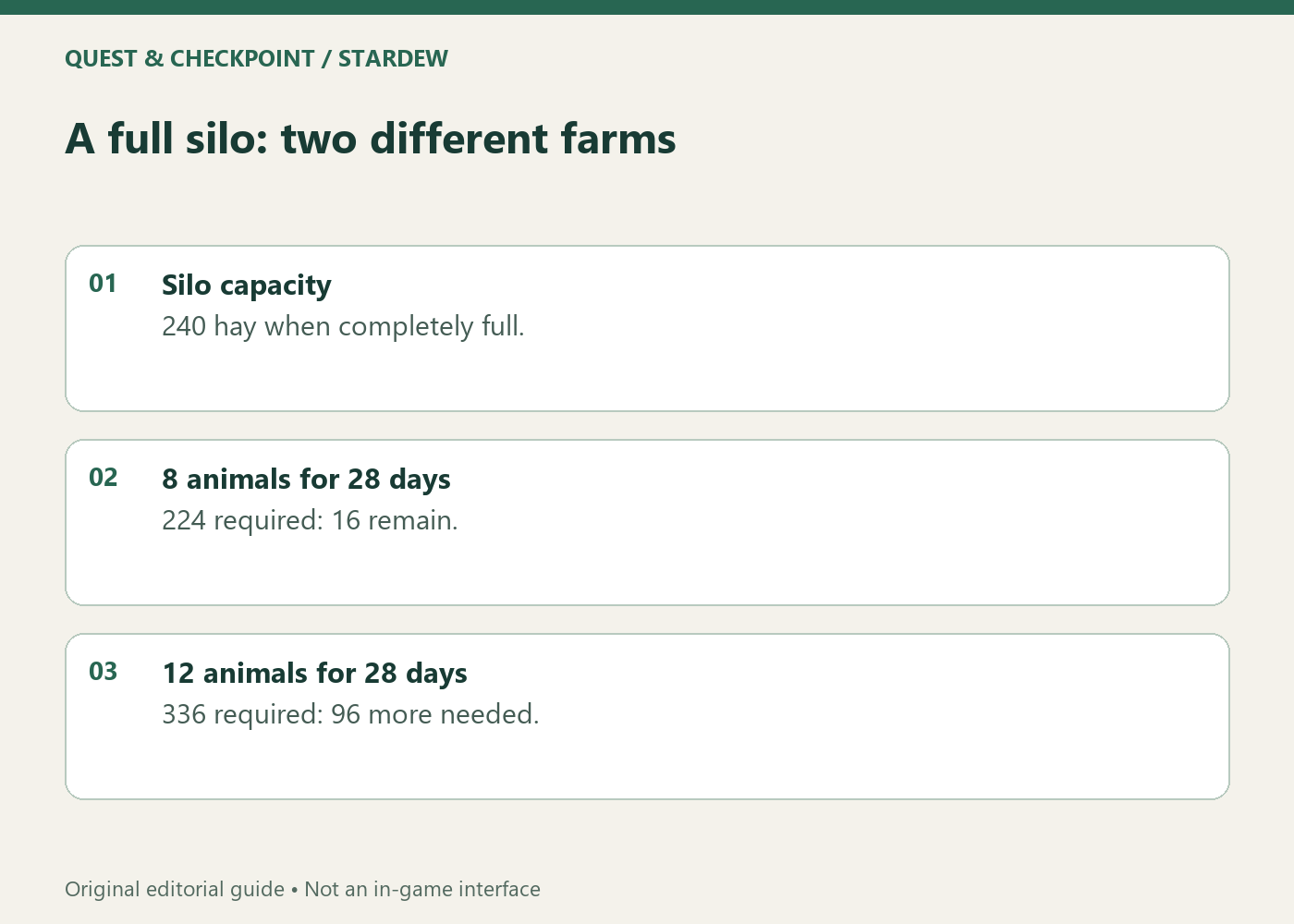
A silo holds 240 hay. With twelve animals, one completely full silo is therefore 96 short of the 336-hay seasonal budget. With eight animals, the same full silo leaves 16 after a 224-hay budget. Those numbers describe this example; they are not a recommendation that every farm needs the same number of silos.
Inspect the actual stored quantity before deciding. An empty second silo increases capacity but contributes no food. You can plan a larger stored reserve or a deliberate refill, but write down the amount and timing rather than assuming the extra building solved the shortage. A chest reserve also needs to be moved into the feeding system when required.
Check the feeding bench as well as the hopper

Hay in a silo is accessible through the building’s hopper, but basic feeding still requires hay on the feeding bench. Deluxe coops and barns have automatic feeding; other stages need your action. If animals are unhappy despite a stored reserve, inspect the bench rather than purchasing more hay without checking how it is being delivered.
Build a short morning route: enter the animal building, check feed availability, then perform the rest of your care routine. If you rely on automatic feeding, verify that the shared storage actually contains hay. Automation removes a placement task; it does not manufacture the resource or change the animal count in your budget.
Keep a refill threshold you can recognize
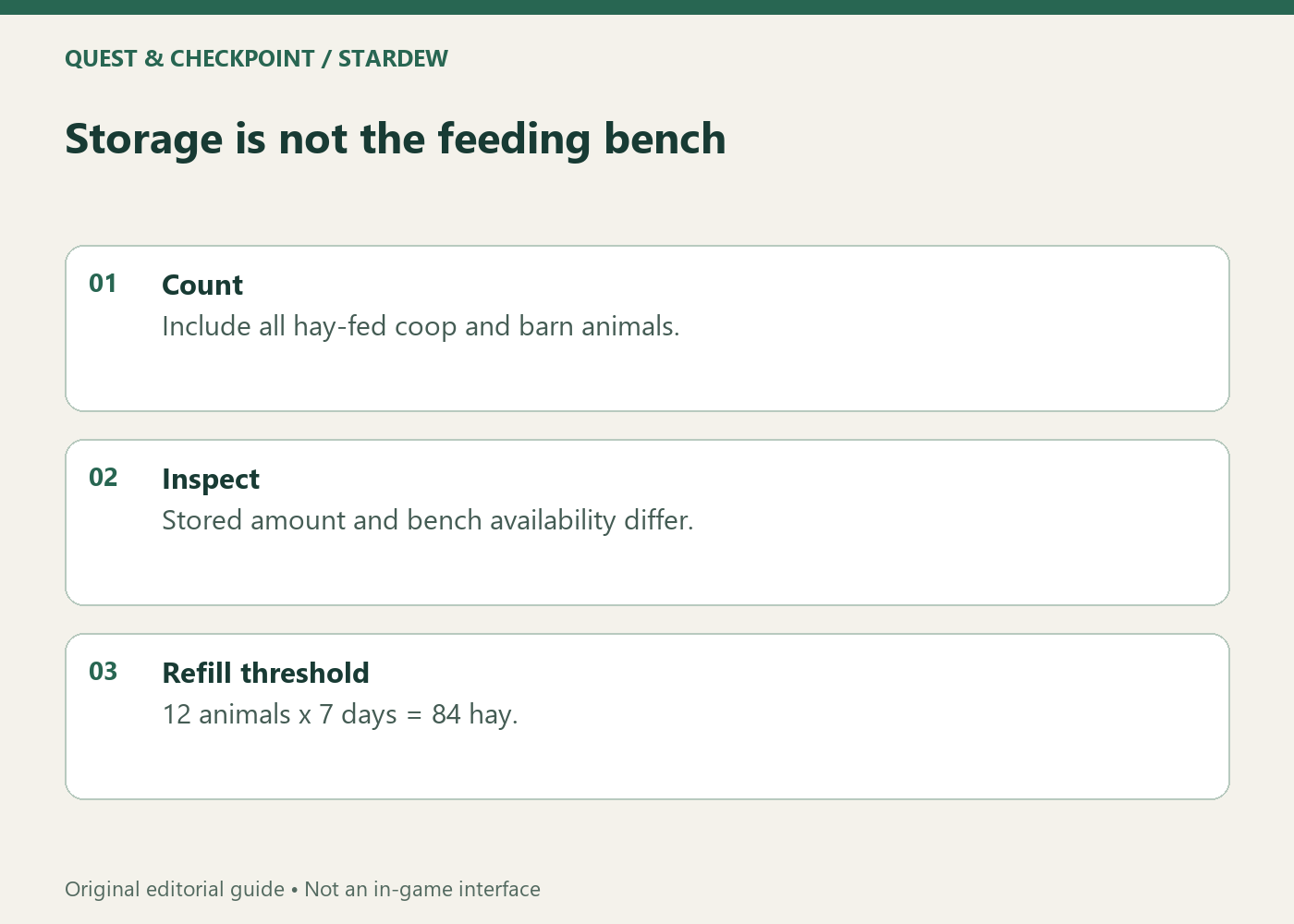
For twelve animals, 84 hay represents seven days under the same one-per-day assumption. That makes 84 a useful reminder threshold for this particular farm, not a universal game rule. At that point, decide how the remaining supply will arrive and allow time for your chosen source rather than waiting until the feeding bench is empty.
Do not use outdated advice that assumes every grass patch disappears when winter begins; grass behaviour has changed across versions. The budget here deliberately depends on stored hay instead. Missing a feeding does not kill the animals, but it affects their condition and can disrupt the results you expected. Counting now is less work than diagnosing an avoidable feeding failure later.