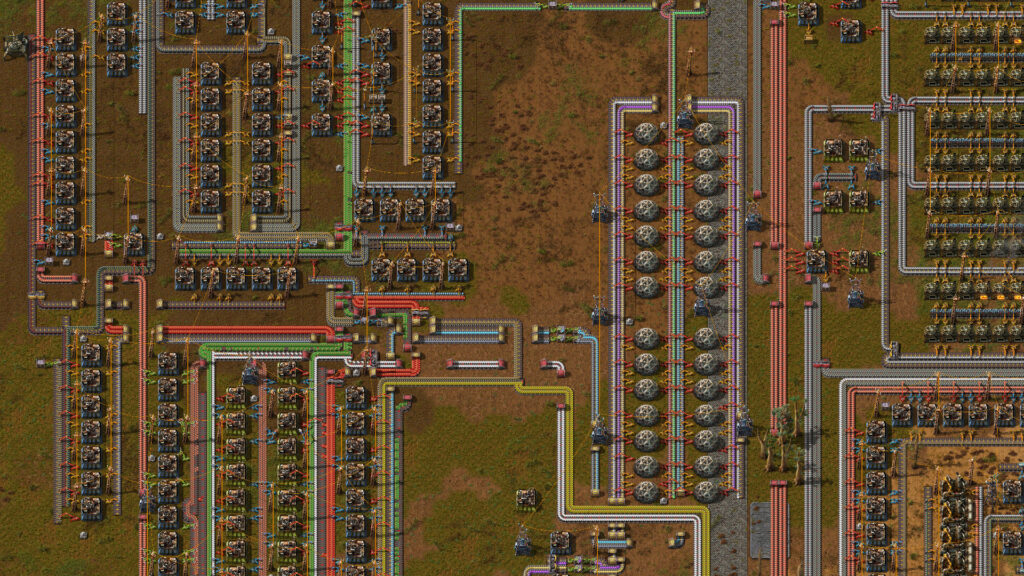
If one branch of your factory runs while another starves, an output-priority setting may be working correctly. Priority answers “who receives material first?” It does not promise two equally supplied factories. Read the intended policy before judging the shape of the belts, then test what happens when the preferred branch fills.
Separate input priority from output priority
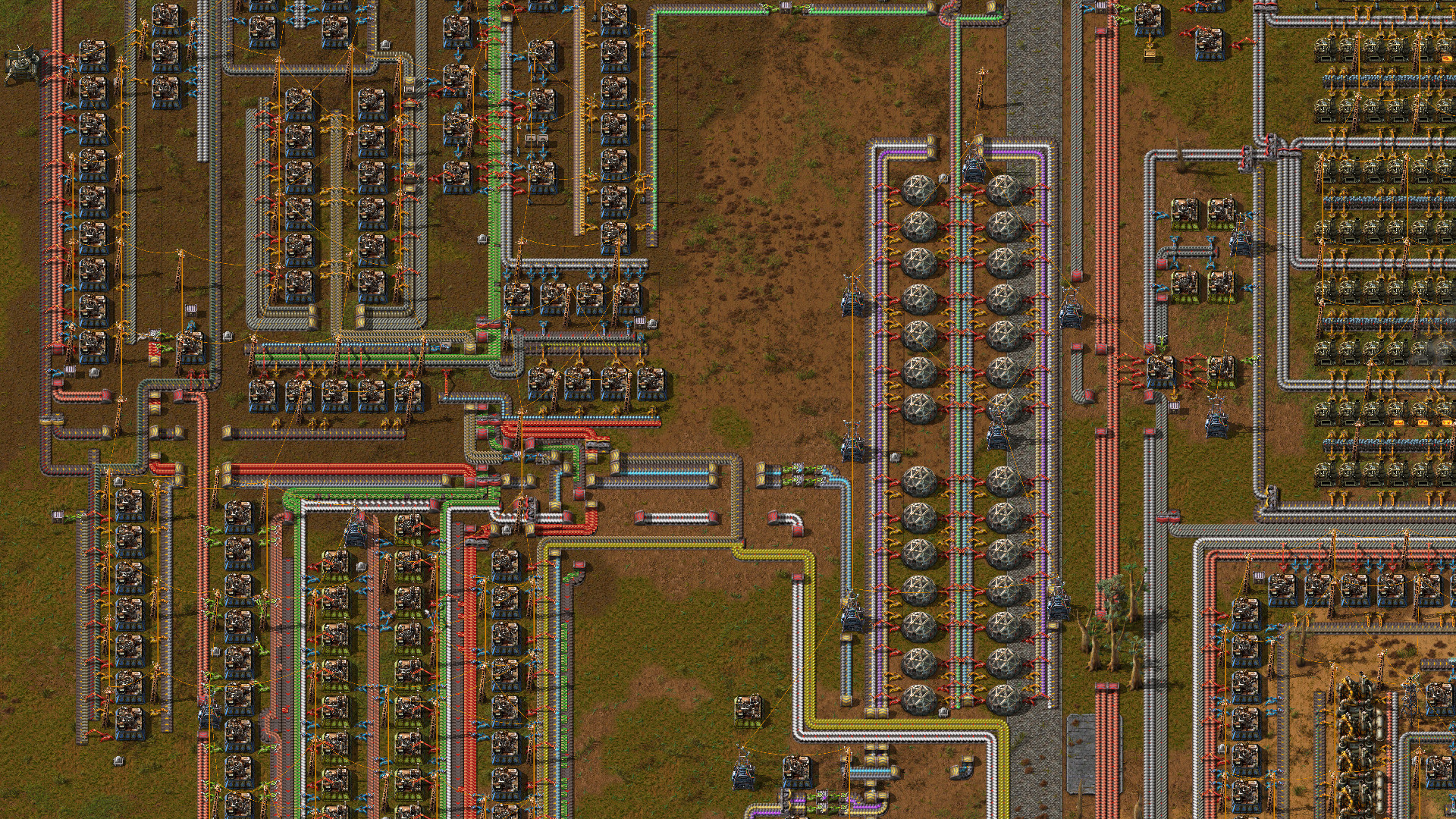
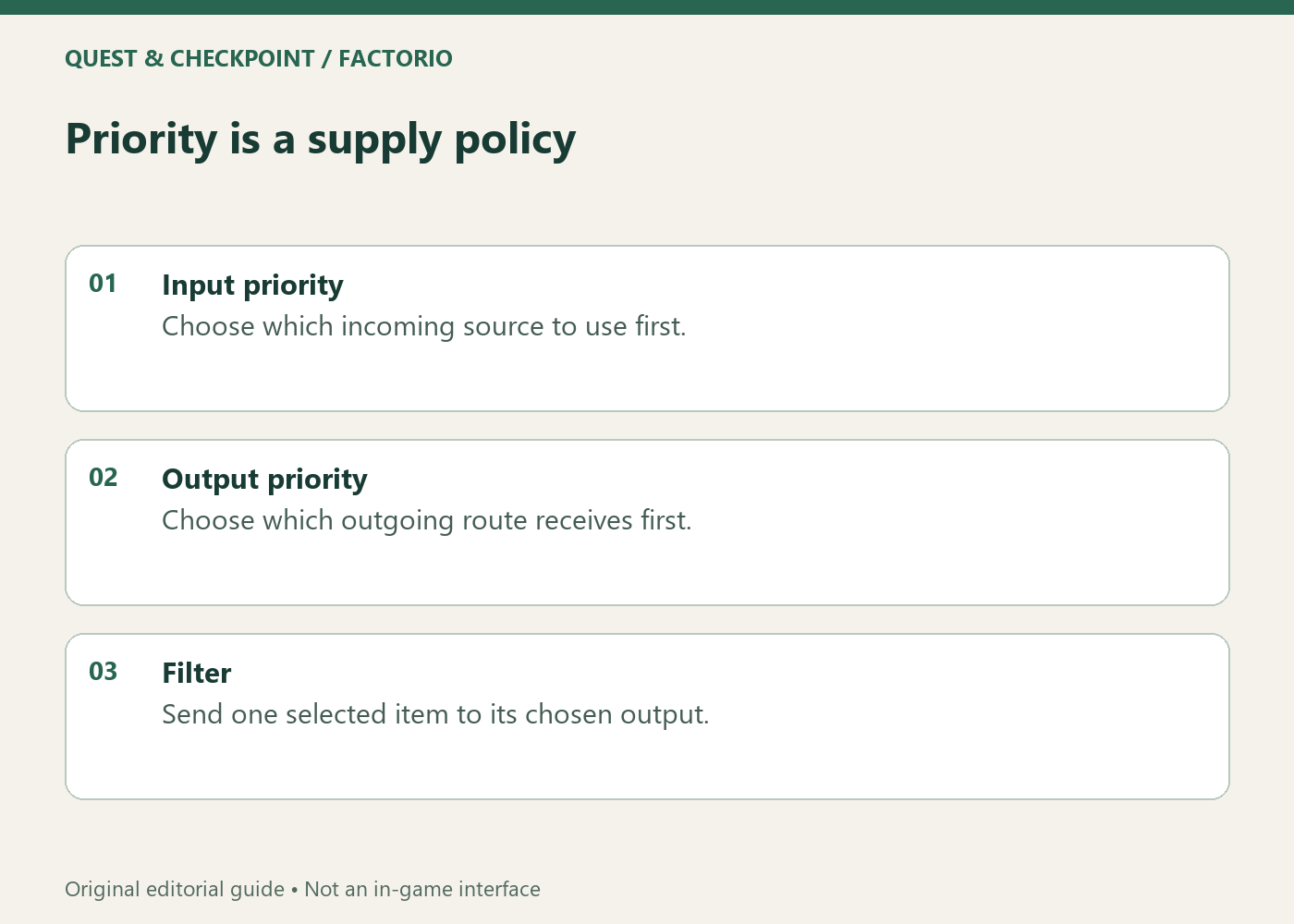
The splitter rules distinguish the two settings. Input priority prefers material from one incoming belt. Output priority sends material toward one outgoing side first and uses the other when that preferred output cannot accept more. A filter is another routing rule, not simply a stronger version of balancing.
Name the purpose before opening the controls. “Use recovered material before new material” is an input-side policy. “Keep the essential branch supplied before optional production” is an output-side policy. Writing those sentences beside the junction helps you avoid changing the wrong side because both settings happen to say left or right.
Calculate the leftover, not half of the input
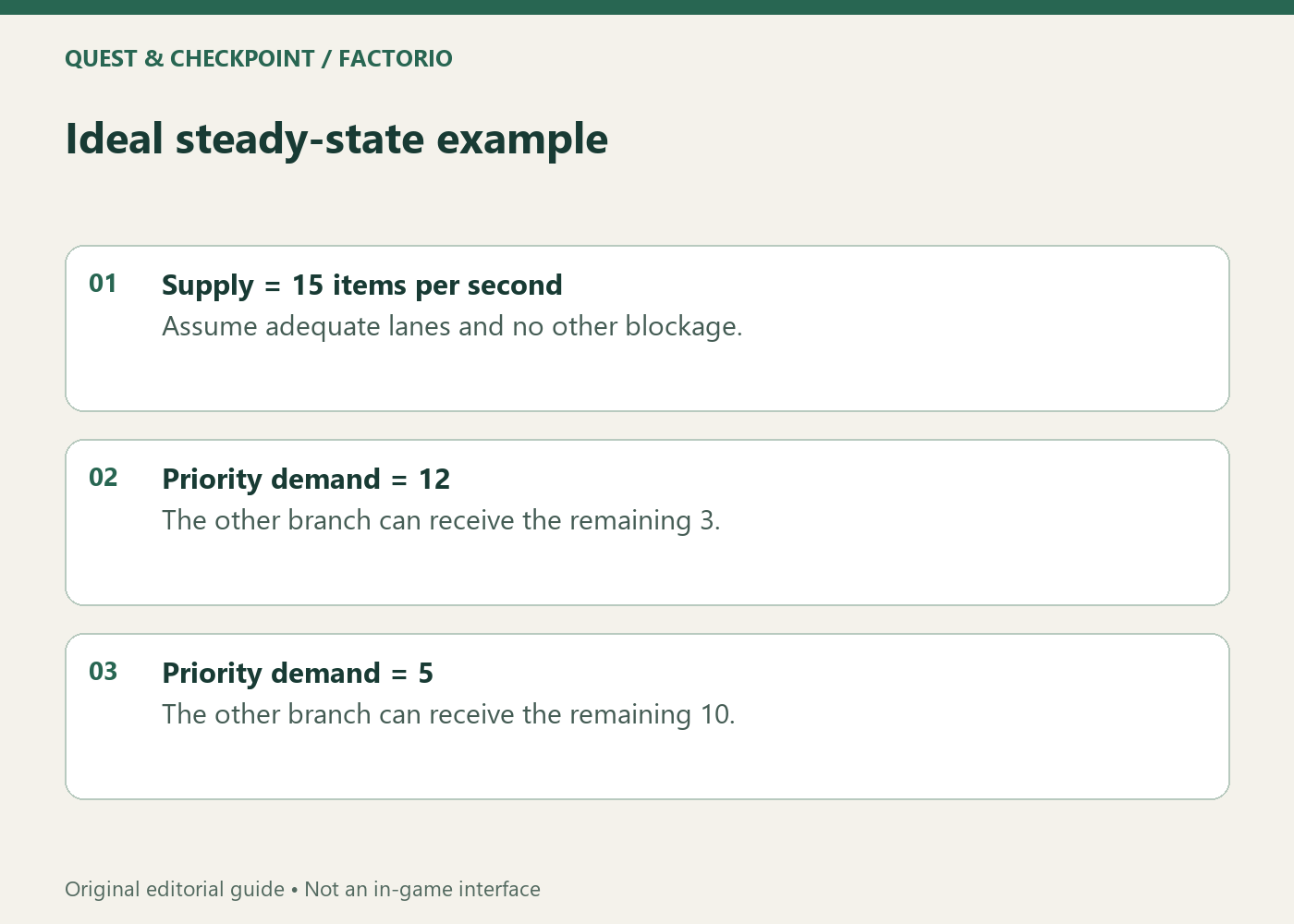
Consider an idealized steady supply of 15 items per second with an unfiltered priority output. Assume both lanes and all downstream connections can carry the required flow. If the priority branch continuously consumes 12, the other branch can eventually receive the remaining 3 once the preferred route has filled its buffers. That is allocation, not a measured benchmark.
If the preferred branch instead consumes 5, the remaining long-run supply can be 10. During initial filling, the second branch may wait longer because empty belts and storage on the preferred route are absorbing material. Do not compare the first few seconds of that startup with the steady-state arithmetic and conclude that the splitter has lost items.
Run a reversible observation before rebuilding
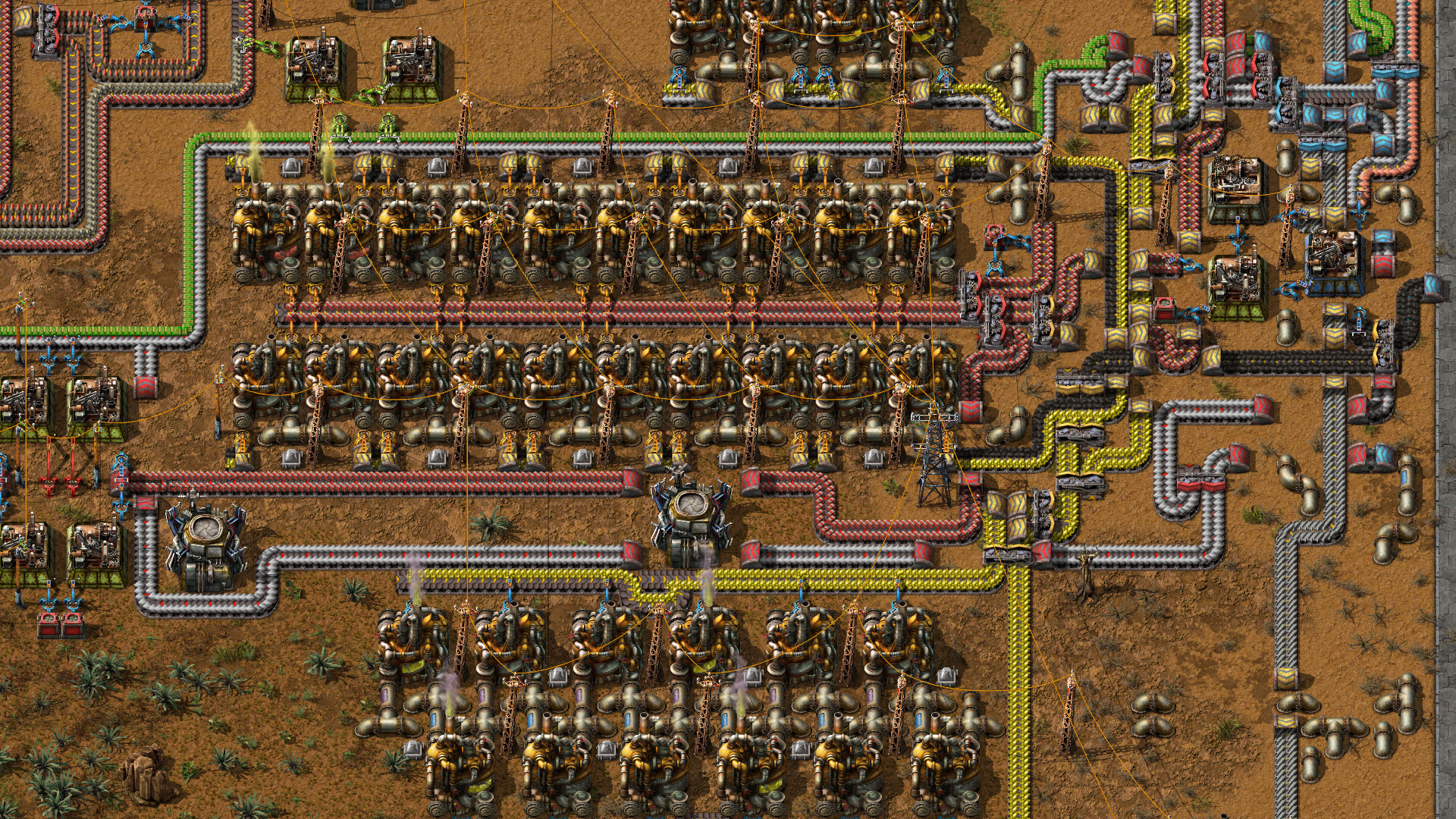
First identify which outgoing side is preferred and follow it to the actual consumer. Look for storage, long empty belts or a downstream obstruction. A route you describe as “only one machine” may contain enough empty buffer space to absorb supply for a while. Watch where items accumulate instead of judging only the two tiles immediately after the splitter.
For a controlled check, use a small separate test arrangement or a safe part of your factory where you can temporarily stop the preferred consumer. Observe whether the second route begins receiving material after the preferred route backs up. Restore the original arrangement afterward. Do not disable a critical supply line merely to demonstrate a routing rule.
Use balancing when equal access is the actual goal
If both factories should share limited supply, revisit the priority policy rather than continually upgrading the deprived branch. With no priority or filter and both outputs accepting items, the basic split is even. But that does not create more input, and a blocked output changes how the available material can be routed.
A useful final check compares total demand with total supply. Two branches needing 12 each cannot both run continuously from a supply of 15, regardless of how fair the junction looks. Decide whether to add production, reduce demand or deliberately protect one branch. The correct splitter setting follows that decision; it cannot substitute for it.