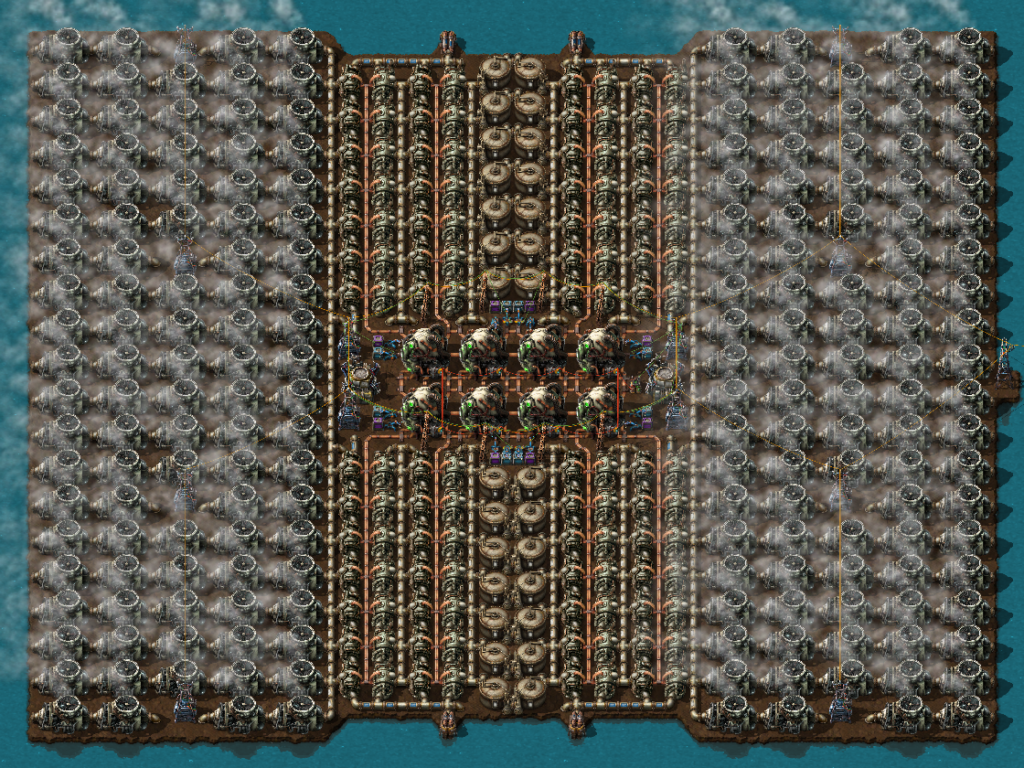
Your first reactor is glowing, but the factory is still crawling. Building a second one might help—or leave the same fault attached to a larger heat source. Follow the energy through the plant before spending more uranium: reactor heat, exchanger water, hot steam, then the electrical network.
This guide uses normal-quality buildings and the nuclear fission system in Factorio 2.0. It does not use Space Age fusion ratios. The check order below is an editorial troubleshooting method based on the game’s documented mechanics, not a claim that this exact layout was tested in a save.
1. Find out whether the factory is actually short of electricity
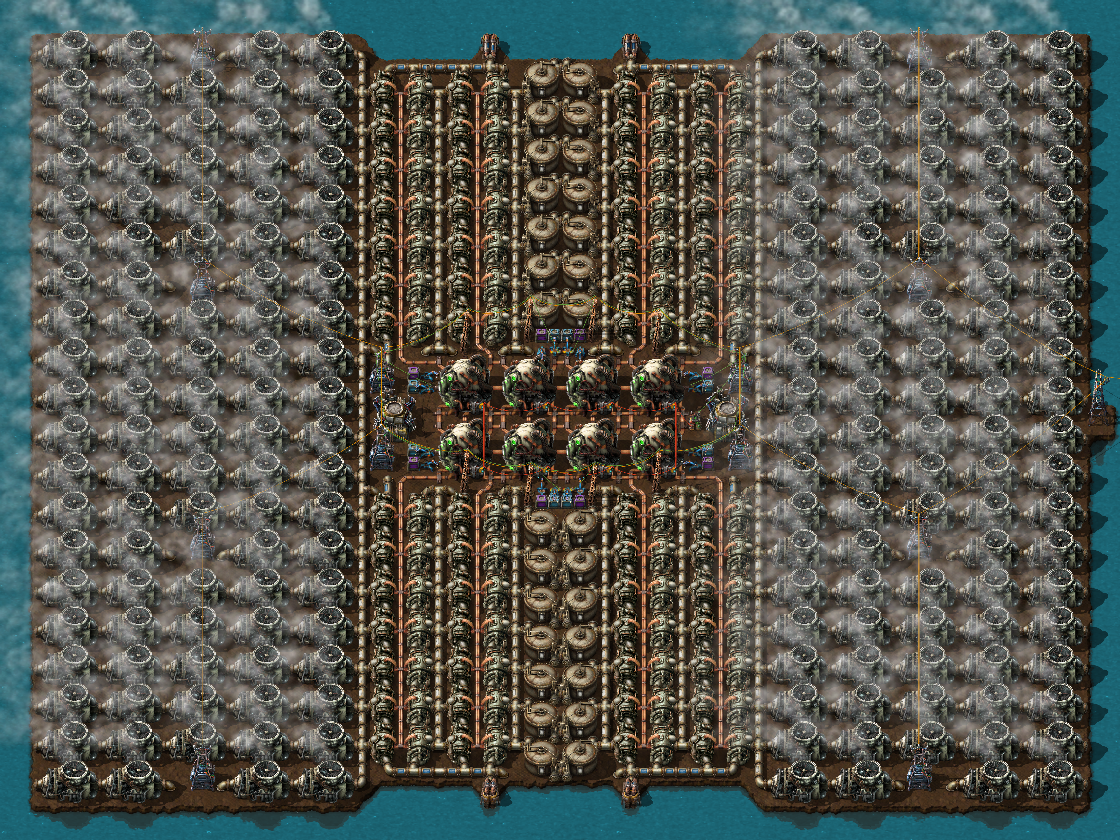
Click a power pole near a slow machine. Read satisfaction first. A full satisfaction bar means that network’s demand is being met; low turbine output alone is not a fault. Turbines follow demand, and solar generation can leave them with little to do during the day.
If satisfaction is low, click a pole at the power plant too. The electricity display belongs to the selected network, not your entire map. A healthy plant on a disconnected network cannot rescue the assemblers. Check the connecting wires and any power switch before modifying the nuclear equipment.
2. Follow the first missing input, one machine at a time
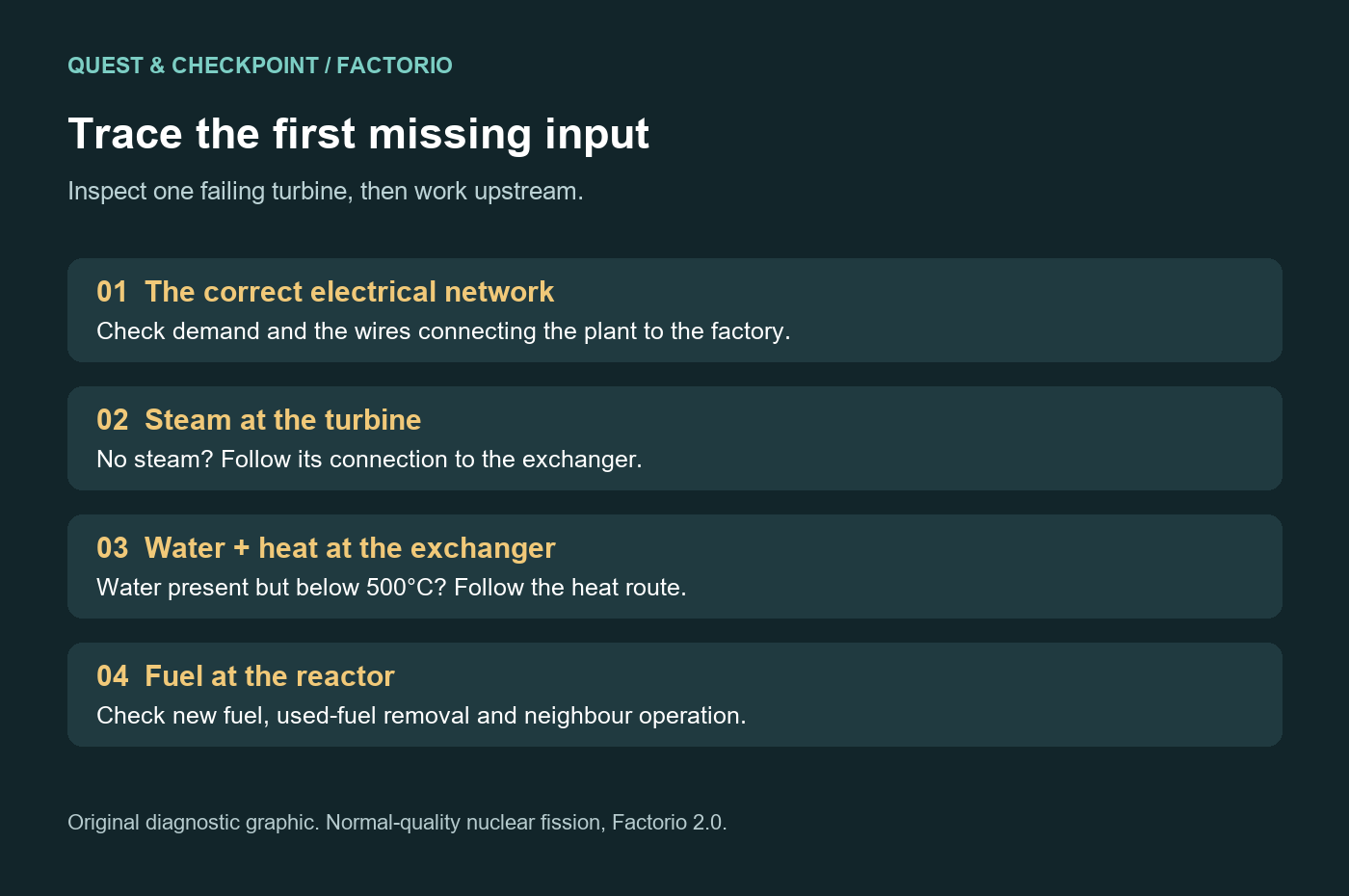
| What you find | What to inspect next |
|---|---|
| Turbine has no steam | Inspect the connected exchanger and the steam connection. |
| Exchanger has water but stays below 500°C | Follow the heat connection toward the reactor; compare temperatures along that route. |
| Exchanger is hot but has no water | Trace its water input back to the offshore supply. |
| Reactor stops heating after running | Check incoming fuel, used-fuel removal and the inserters serving both. |
| Turbine contains hot steam but the factory is underpowered | Recheck network membership, then compare turbine capacity with demand. |
A newly built plant also needs to warm up. An exchanger cannot produce steam below 500°C. Checking the reactor alone misses the important measurement: whether heat has reached the exchanger doing the work. Long heat routes deserve inspection before you decide that the fuel supply is inadequate.
Keep ordinary boiler steam out of your diagnosis. The turbine’s normal 5.82 MW maximum assumes 500°C steam. Feeding it 165°C boiler steam only permits 1.8 MW; replacing an engine with a turbine does not magically raise that steam’s energy.
3. Count the neighbours that are really operating
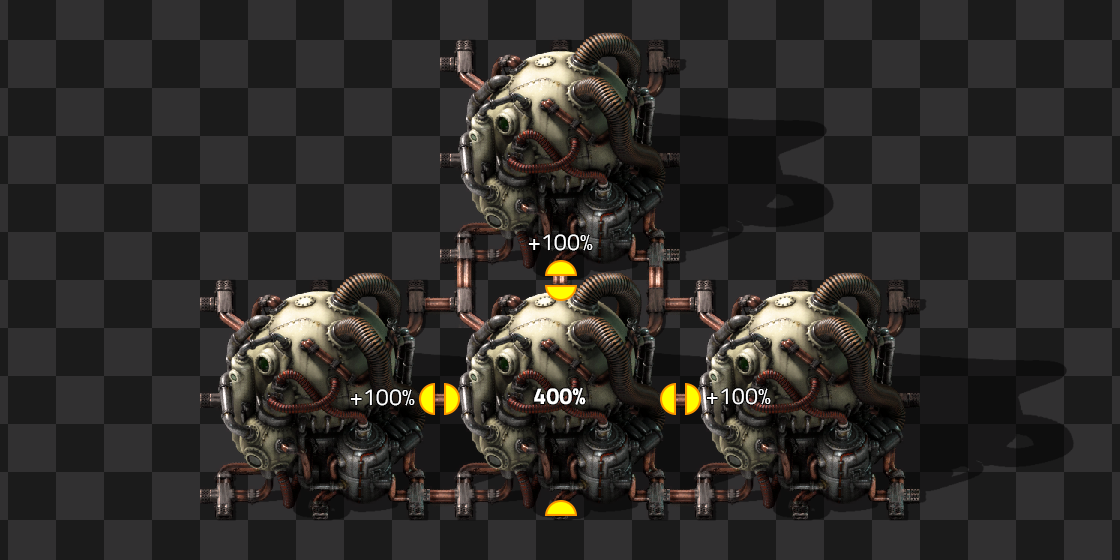
A normal lone reactor supplies 40 MW of heat. Two correctly aligned, operating neighbours supply 160 MW together. The jump is substantial, but it depends on both being fuelled and all three heat connections along their shared side lining up. Touching at an offset is not the same arrangement.
Check the reactor’s neighbour bonus instead of estimating from the footprint. A missing fuel supply can remove both a reactor’s own heat and the benefit it gives its neighbour. For troubleshooting, restore fuel to the intended pair before redesigning the exchanger rows.
4. Expand the bottleneck, not every part of the plant
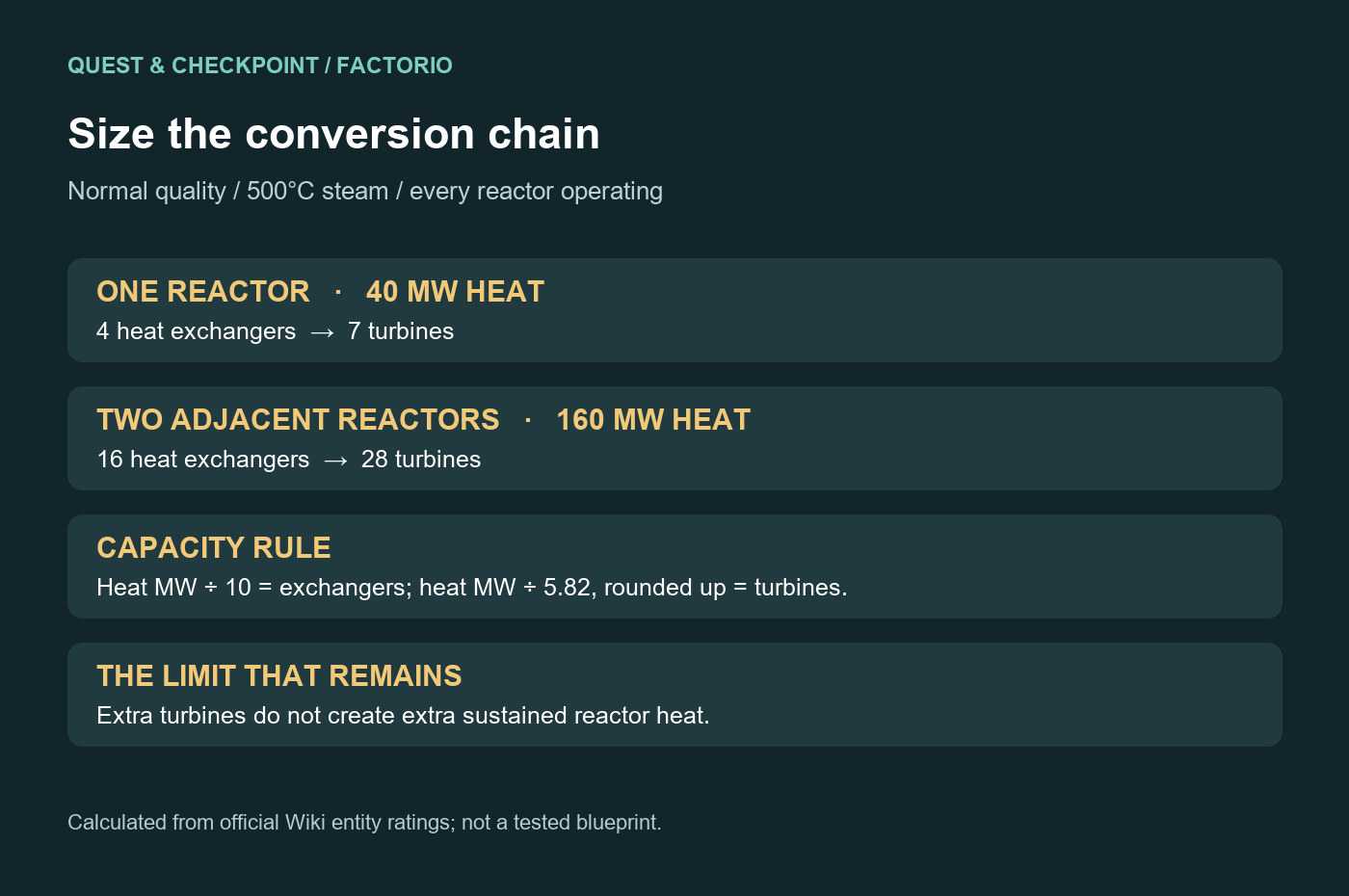
Each normal heat exchanger handles 10 MW. Divide your reactor heat by ten for exchanger capacity, then divide by 5.82 and round up for enough turbines. That gives 4 exchangers and 7 turbines for a lone reactor, or 16 and 28 for an operating adjacent pair. Seven turbines do not turn a 40 MW heat source into a sustainable 40.74 MW source.
For example, a correct two-reactor pair feeding only four exchangers is still limited to 40 MW through those exchangers. More turbines will not lift that limit. Conversely, sixteen exchangers feeding only seven turbines leave the electrical conversion stage too small for the pair’s potential. These are capacity calculations; a disconnected or cold layout can perform worse.
One version trap matters when checking water: from 2.0.7, one unit of water becomes ten units of steam. A normal exchanger needs about 10.3 water per second at full load. Do not copy a pre-2.0 water-demand number into a new plant.
After changing one thing, revisit the same slow machine and check its network again. A successful repair restores satisfaction when demand is present and keeps the inputs available. A brighter reactor, a bigger blueprint, or a full steam tank is only part of that evidence.