You have seeds, sap and a shrinking planting window. The tempting answer is to fertilize every square with whichever bag you already own. In Stardew Valley, that can spend resources on a benefit you did not need. Choose the harvest goal first, then treat the soil.
Pick the benefit that solves this crop’s problem
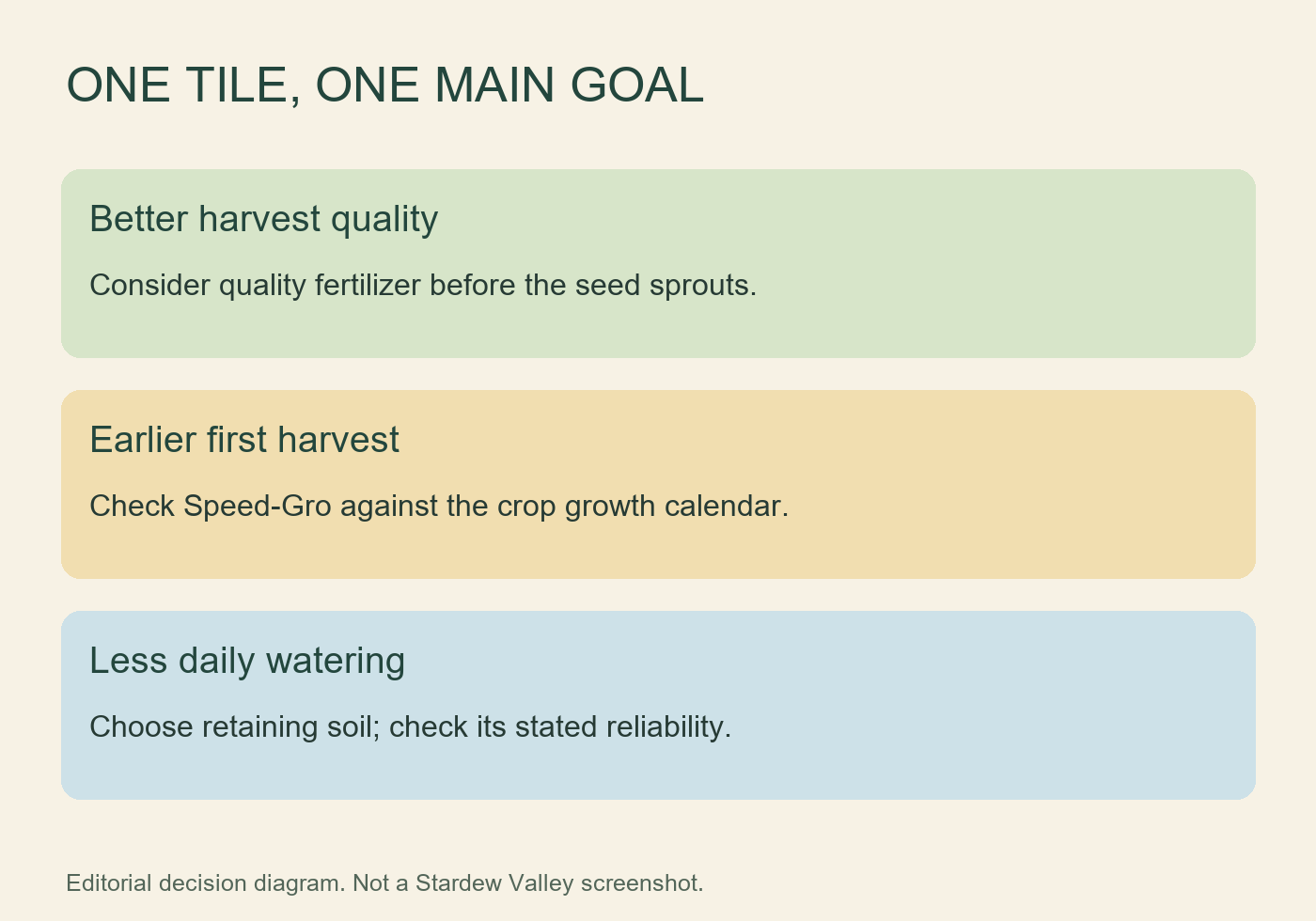
The official wiki’s fertilizer reference separates quality, growth speed and water retention. Only one fertilizer type fits a soil tile. You cannot stack three different bags to collect every benefit.
| Your immediate goal | What to consider | What not to assume |
|---|---|---|
| A quality-sensitive harvest | Quality fertilizer | Every item will become gold quality |
| An earlier first harvest | A growth-speed fertilizer | Repeat harvests will also arrive faster |
| Less watering work | Retaining soil | Every tier keeps every tile wet |
For a small mixed farm, mark the important patch before planting the rest. A few crops grown for a particular quality requirement deserve a different decision from a field whose main purpose is to produce its first harvest sooner. Treating both patches identically is convenient, but convenience is not the same as a useful upgrade.
Apply Basic Fertilizer before the seed sprouts
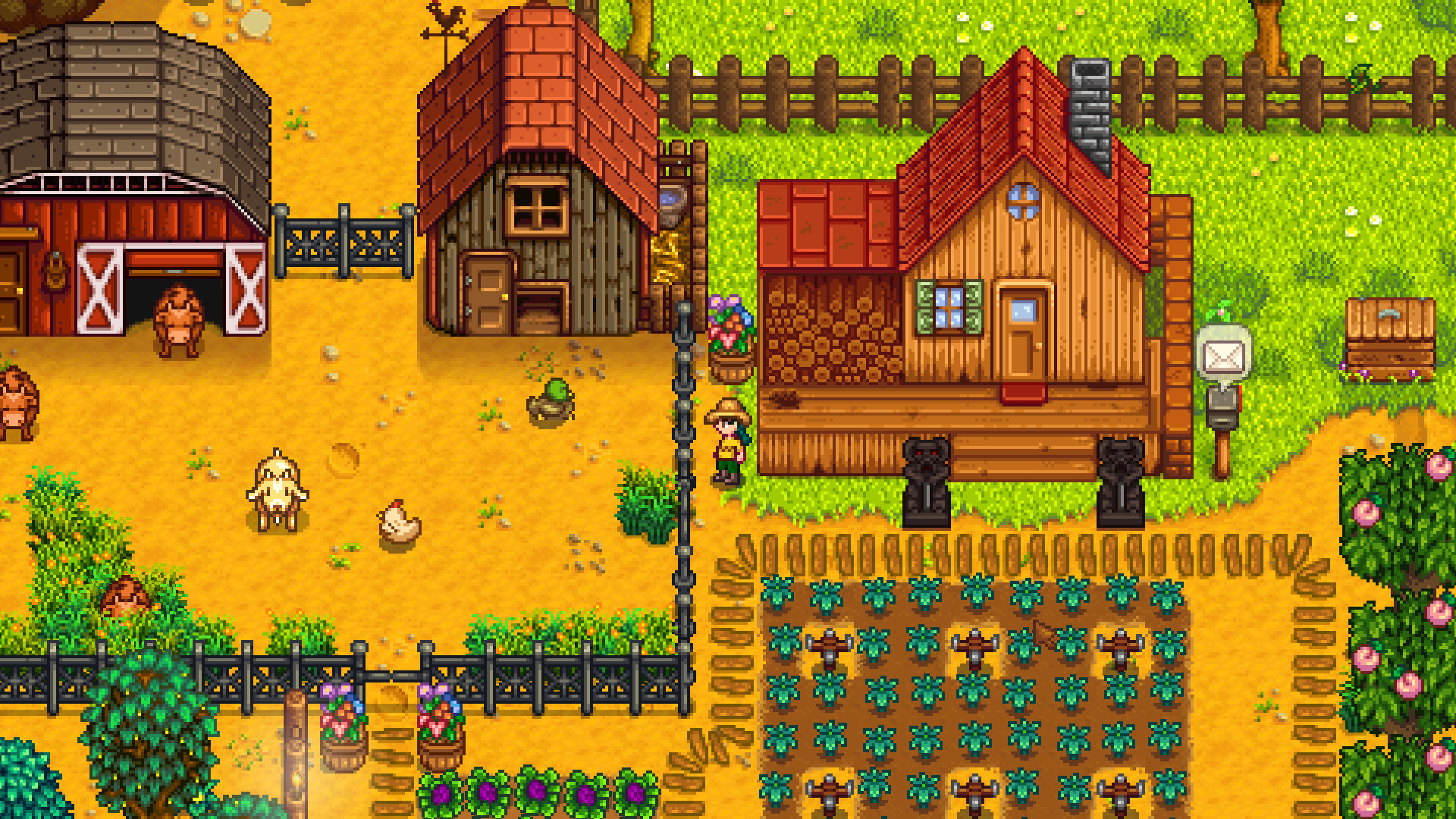
Basic Fertilizer can go on tilled soil containing an unsprouted seed. Once the seed has sprouted, that application window has closed. Its crafting recipe uses two sap for one fertilizer after the recipe is learned.
That distinction saves an unnecessary restart: planting the seed first is not automatically a mistake. Check whether it has sprouted before giving up on the patch. For future plantings, putting fertilizer down before seeds is an easy routine to remember.
Also keep expectations realistic for crops that produce several items together. Quality fertilizer does not improve every extra blueberry in the same harvest. A mixed-quality stack is not by itself evidence that the fertilizer failed.
Speed-Gro helps the first harvest, not the regrowth clock
Speed-Gro can be applied during growth, but a late application cannot recover growth stages that have already passed. On a repeat-harvest crop, its benefit concerns the initial growth period; it does not shorten the later intervals between harvests.
Before spending it on an established field, compare the remaining calendar with the first harvest you actually need. If your reasoning is “this mature crop should produce more often,” you are buying the wrong benefit. If you need an earlier first harvest, look up that crop’s growth calendar rather than multiplying every date by the percentage printed on the bag.
Keep a tiny record instead of guessing next season
For the patch that matters, note just the crop, planting day and fertilizer used. Add the first harvest day when it arrives. That record helps distinguish a timing mistake from an unsuitable fertilizer choice without turning the whole farm into an accounting exercise.
Keep the next change small. Choose one goal for one patch, check the application window, and use the remaining resources where they solve a real problem. There is no need to spend a full stack merely because you crafted it.