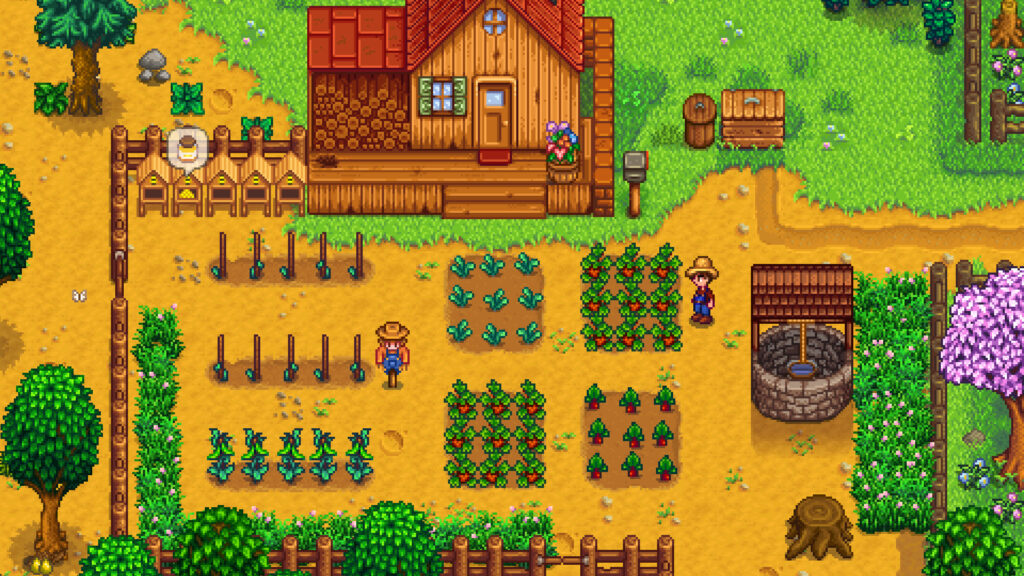
A chest full of fruit and one empty machine is a scheduling problem, not just a sale-price comparison. Ask whether you are short of crops, processing capacity or time before a purchase. These examples cover ordinary wine and jelly without professions or ageing; special recipes need separate calculations.
Start with the crop's base value
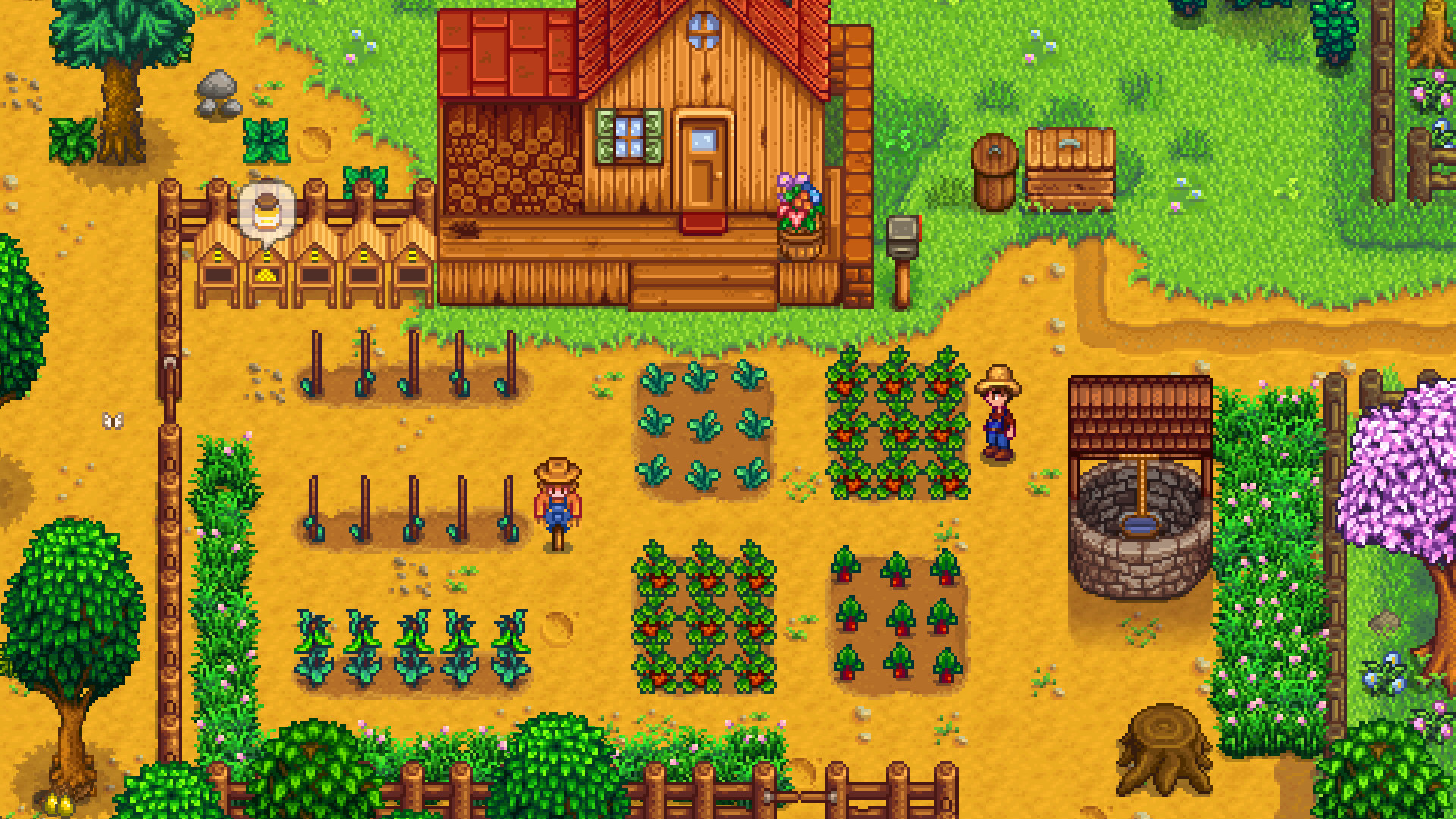
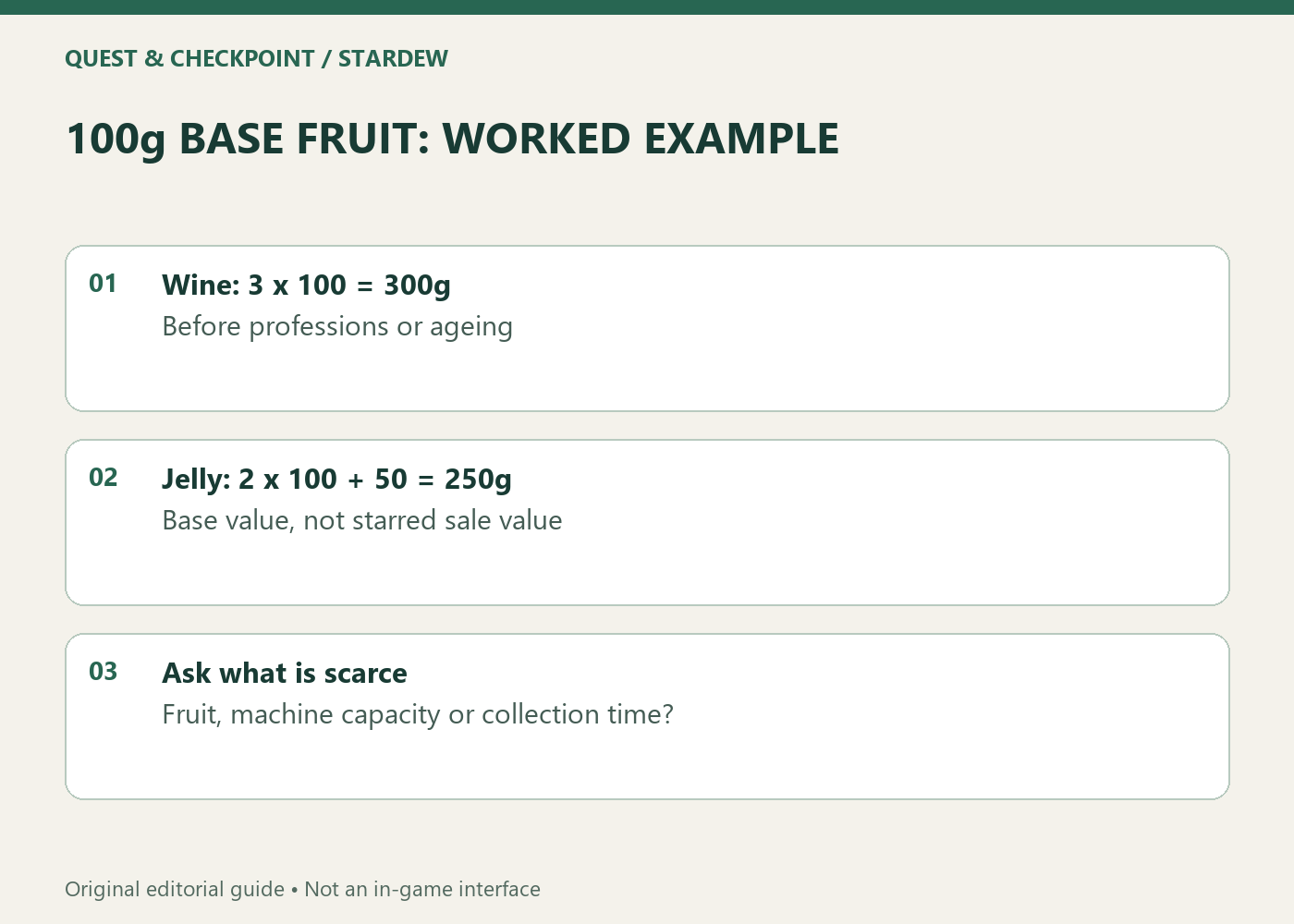
For ordinary fruit, wine sells for three times the fruit's base price. Jelly uses twice the base price plus 50g. Input quality does not turn the resulting product into an equivalent quality tier. Before processing an expensive starred crop, compare its direct sale value with the product you will actually receive. Do not substitute the gold-star sale price into the base-value formula.
Consider an illustrative fruit worth 100g at normal quality. Wine is 300g and jelly is 250g before applicable profession bonuses. That establishes value per fruit, not the best use of every machine. Label your assumptions; a number copied from a late-game farm can quietly include an Artisan bonus or cask ageing that your farm cannot reproduce.
Compare the queue, not only the bottle
Ordinary wine occupies a keg for 10,000 processing minutes; jelly occupies a jar for 4,000. Clock-time estimates vary with overnight processing. The shorter jar cycle matters when unprocessed crops keep arriving. If your harvest is scarce and machines are often empty, extracting more from each fruit can matter more than rapid turnover.
Try a planning sheet with three columns: items waiting, machines available and next planned collection. Ten crops with ten machines is different from hundreds of crops with one machine. A theoretical daily rate assumes you collect and refill promptly. If you only visit a shed occasionally, compare the routine you will actually maintain, rather than treating continuous operation as guaranteed.
Include the cost of the next machine
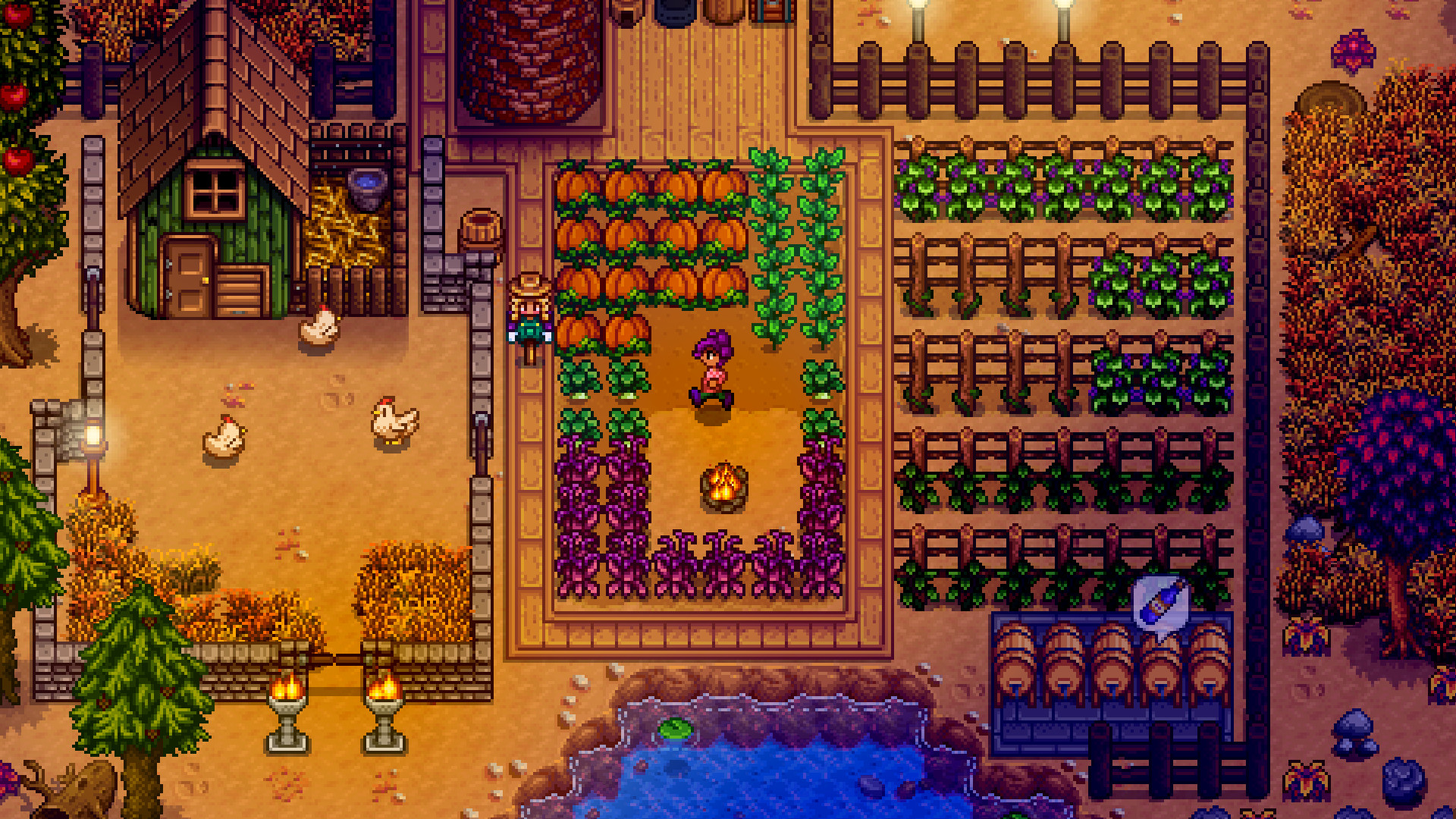
Kegs and jars use different crafting materials and unlock at different farming levels. A recommendation that ignores your available resin, metal, coal or stone may solve the wrong problem. Check the crafting recipe in your save, then ask which shortage competes with plans for tool upgrades, sprinklers or construction.
You might use existing jars for a large low-value harvest while reserving a few kegs for higher-value fruit. This is a capacity allocation, not a permanent rule that one machine is superior. Keep enough unprocessed produce for bundles, requests or gifts you still need. A processing queue should support your goals instead of consuming every useful item automatically.
Run one harvest through your own comparison
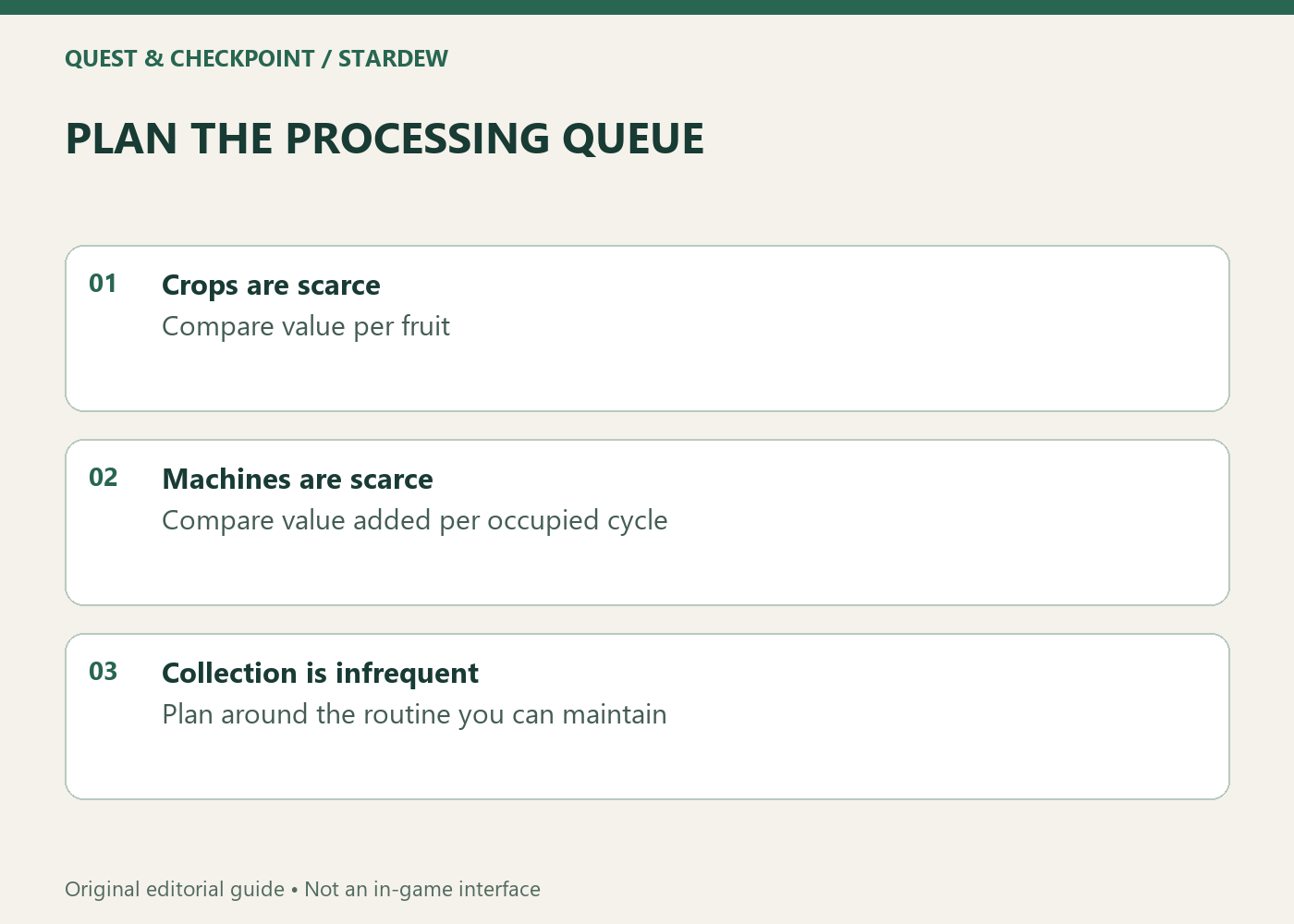
Choose a single crop and record the raw value, output value, machine occupied and collection date. Subtract the raw sale value when comparing value added; the entire product price is not new profit created by processing. Keep seed and growing costs consistent if you extend the comparison to crop selection.
After the batch, decide what limited you. If finished goods sat uncollected, improving the collection route may help more than another machine. If all machines were busy and crops accumulated, added capacity has a clearer purpose. If machines were idle, a higher return per scarce fruit may suit you. This experiment produces a decision for your farm without pretending one spreadsheet answers every season.