
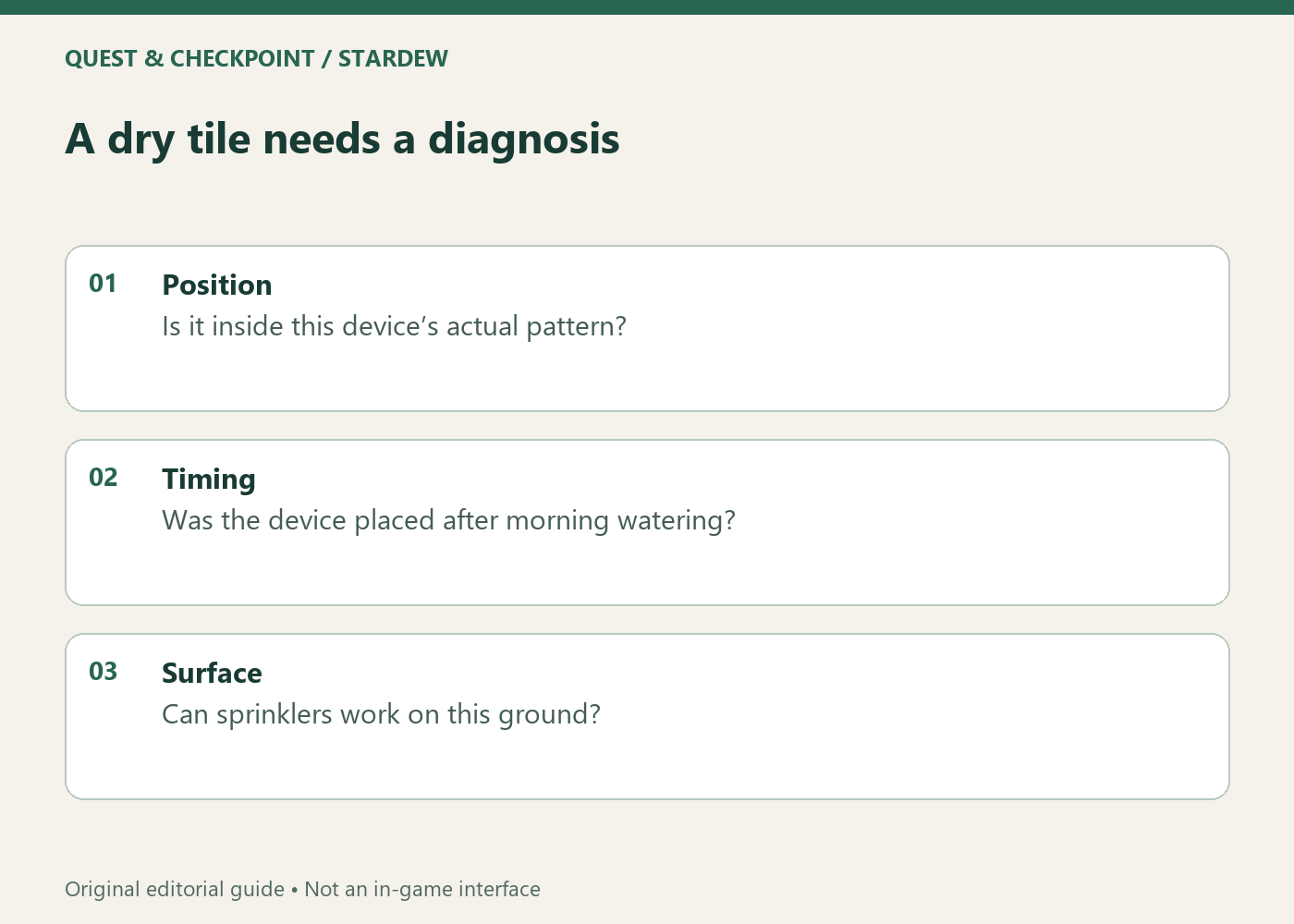
A dry plant beside a sprinkler is not automatically a broken sprinkler. It may be outside the pattern, newly planted after the morning watering, or on terrain where the device does not work. Check one small bed before expanding the design across your farm. That turns an expensive layout guess into a repeatable morning check.
Draw the actual coverage pattern

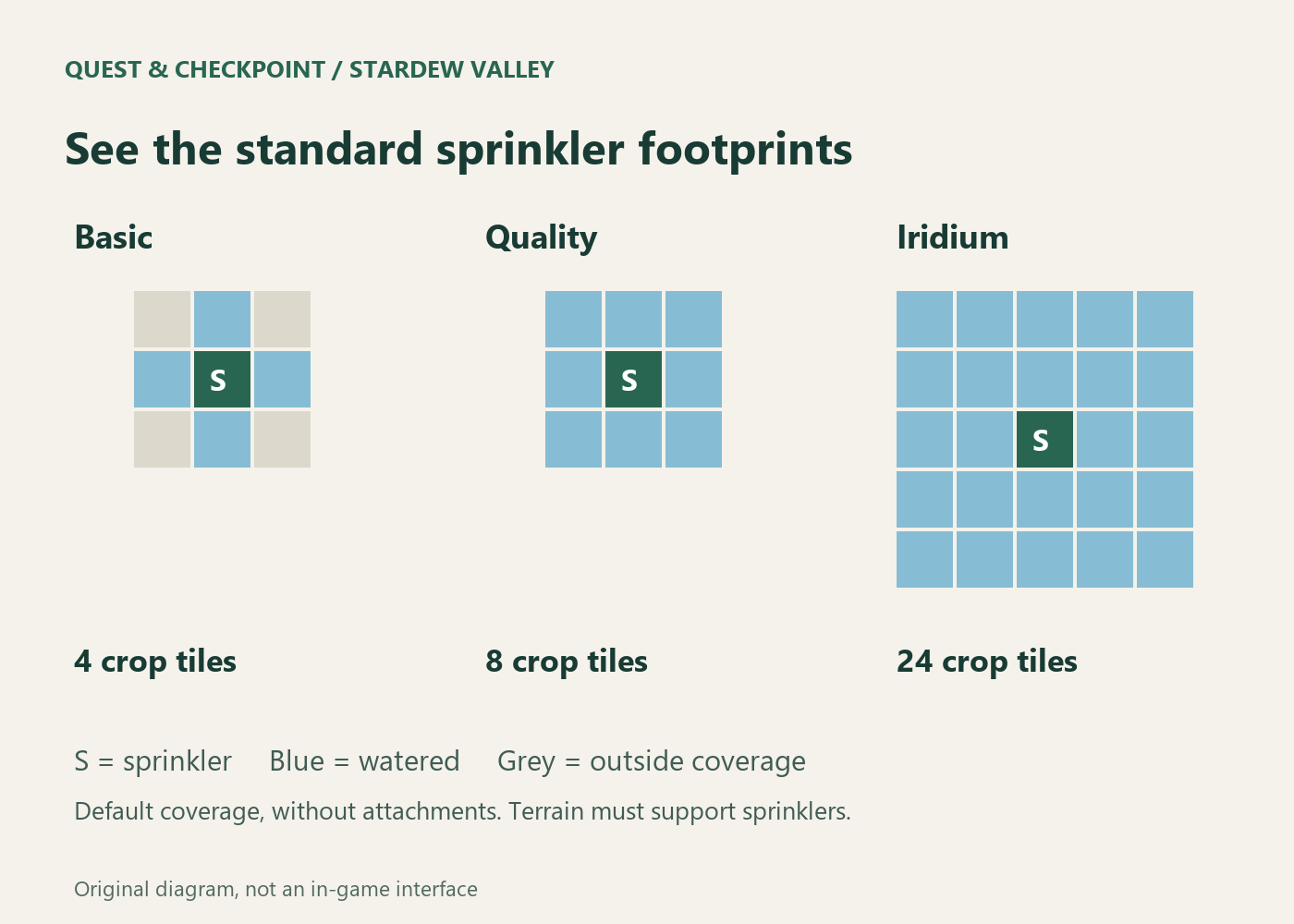
A basic Sprinkler waters four orthogonally adjacent tiles, leaving the diagonals outside its pattern. A Quality Sprinkler covers the eight surrounding tiles in a three-by-three square. An Iridium Sprinkler covers twenty-four tiles in a five-by-five square. These are the standard patterns without attachments that modify coverage.
Use an empty patch to sketch the footprint. Mark the sprinkler’s own tile separately from the crop tiles, because counting the entire square as plantable exaggerates the result. In a three-by-three footprint, for example, nine ground positions do not mean nine watered crops: the central device occupies one of them.
Distinguish a placement day from a working morning
Sprinklers perform their watering in the morning. Placing one after that watering moment does not mean every nearby dry tile will instantly change. Water newly prepared crops yourself when necessary, then inspect the same bed the following morning. Make a note of when you placed the device so this first-day condition is not mistaken for a persistent failure.
Run the check on an ordinary dry morning. Rain can conceal an uncovered tile because the crop receives water from another source. A useful test keeps the sprinkler type, position and bed unchanged, then asks whether the intended tiles are wet before you use your watering can. Otherwise your own watering can hide the exact gap you wanted to find.
Calculate crop positions after removing overlaps
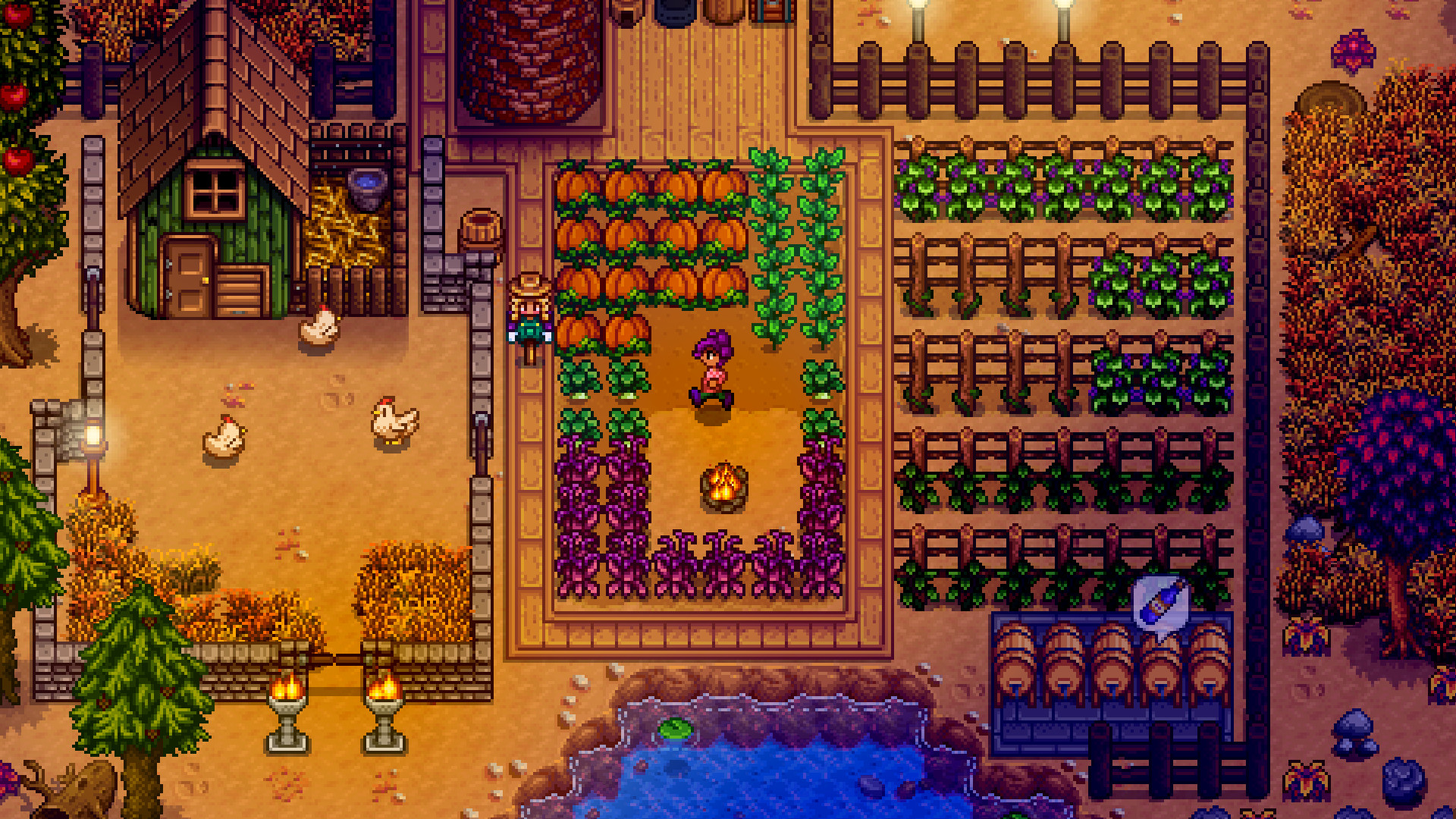
Two Quality Sprinklers have a theoretical total of sixteen covered crop positions only if their useful coverage does not overlap and the terrain is suitable. Put them too close and some tiles are counted twice. Instead of multiplying the number of devices by eight, draw each footprint and count the distinct plantable positions.
Keep walking access and other farm objects in the same sketch. A path or machine occupying a covered tile may be a deliberate convenience, but it is not a watered crop. This is a planning trade-off, not necessarily a mistake: a slightly smaller bed that you can use comfortably may suit your daily route better than squeezing every theoretical position into production.
Check the surface before blaming the pattern
The Beach Farm is the obvious warning against assuming that every farm tile accepts ordinary sprinkler irrigation: most sandy ground does not. Verify the particular planting area rather than applying a standard diagram to the entire map. Attachments and special locations can also change what a simple default-pattern guide establishes.
Before buying more devices, classify the dry tile: outside coverage, wrong timing, unsuitable surface, or an unresolved configuration problem. Change one cause and repeat the morning observation. Once one bed behaves as expected, copy that verified footprint. The reward is not just less watering; it is knowing why the next bed should work before investing in it.